
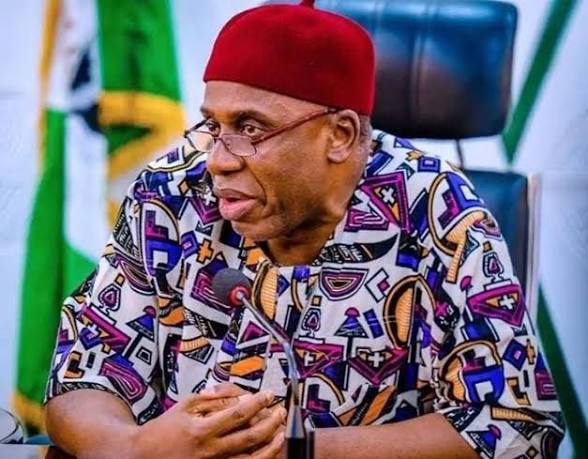
Nigeria’s 2027 presidential race is beginning to take shape as former Transportation Minister, Rotimi Amaechi, formally steps into the contest under the African Democratic Congress (ADC). His entry comes with bold claims about governance, experience, and a sharp critique of the current administration’s economic direction.
But beyond the political declaration, the announcement reflects a deeper contest over Nigeria’s economic hardship, leadership credibility, and voter fatigue ahead of what is shaping up to be a highly competitive election cycle.
On Thursday, former Rivers State Governor and ex-Minister of Transportation, Rotimi Amaechi, officially declared his intention to contest the 2027 presidential election under the ADC platform.
Speaking after submitting his nomination forms at the party’s national headquarters in Abuja, Amaechi said he is confident in his ability to “turn Nigeria around in four years” if elected president.
He also emphasized that leadership selection in 2027 should be based on competence rather than ethnicity or regional loyalty.
According to him:
Advertisement
“I believe I am the most experienced. I am young, I am the most experienced, and I believe I have the capacity… I will, in four years, turn the country around.”
He further urged Nigerians to evaluate candidates based on performance records rather than political sentiment:
“Let this be a referendum. If you have performed, whoever has outperformed the other, vote for the person.”
Amaechi’s declaration is not occurring in isolation—it reflects a broader political recalibration among Nigeria’s opposition figures as economic pressure continues to dominate public sentiment.
Nigeria’s inflationary environment, rising cost of living, and subsidy reforms have created political openings for opposition narratives. Yet, analysts note that electoral success depends not only on dissatisfaction but also on strong party machinery and national coalition-building.
What makes this moment more complex is the fragmentation of Nigeria’s opposition landscape. With multiple high-profile figures exploring different platforms, the risk of vote splitting remains significant.
Historically, Nigeria’s 2015 election demonstrated how coalition politics can unseat incumbents. However, sustaining such coalitions beyond elections has often proven difficult due to ideological differences and internal competition.
From a governance perspective, Amaechi’s reference to his tenure as governor and minister will likely become a central campaign talking point. His railway projects, including Lagos–Ibadan and Abuja–Kaduna lines, remain both achievements and points of debate due to their funding structures and debt implications.
The economic subtext of his message is clear: voters are increasingly evaluating leadership through the lens of immediate economic pain rather than long-term infrastructure promises.
Nigeria has faced similar politically charged economic election cycles before. In 2015, inflation hovered around 8–9%, while in recent years it has surged significantly higher, driven by currency pressure, subsidy removal, and import dependency.
Advertisement
Current macroeconomic indicators continue to shape voter expectations, especially among urban populations in Lagos, Abuja, and Port Harcourt, where transportation costs and food prices remain major concerns.
Political analysts argue that unless opposition parties consolidate into a unified front, incumbency advantage and institutional strength may remain decisive in 2027.
As the 2027 election cycle intensifies, Amaechi’s declaration adds another layer to Nigeria’s evolving political equation. The real test will not only be popularity or rhetoric, but the ability to build alliances strong enough to challenge entrenched political structures.
What unfolds next within the ADC primaries—and whether opposition figures can align or fragment further—may ultimately determine how competitive the race becomes.
You must log in to comment or reply.
Comments