
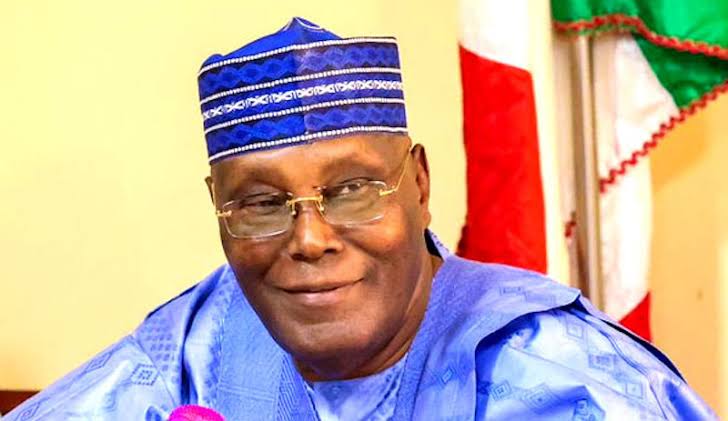
Nigeria’s opposition politics entered a new phase on Tuesday after former Vice President Atiku Abubakar and Aviation Minister Festus Keyamo separately criticised the decision by the Nigeria Democratic Congress (NDC) to zone its 2027 presidential ticket to Southern Nigeria for a single term.
The disagreement exposes growing cracks within Nigeria’s emerging opposition coalition as parties and political blocs attempt to challenge President Bola Tinubu and the ruling All Progressives Congress (APC) ahead of the next general election.
The controversy followed reports that the NDC resolved during its convention to reserve its 2027 presidential ticket for a southern candidate who would serve only one four-year term before power potentially rotates back to the North.
Reacting to the decision, Atiku’s media camp warned opposition leaders against what it described as a politically dangerous strategy.
In a statement issued by his aide, Olusola Sanni, the former vice president argued that no opposition candidate from the same geopolitical region as an incumbent president had successfully defeated a sitting Nigerian leader.
According to the statement, insisting on a southern candidate while President Tinubu, also from the South-West, seeks re-election could weaken the opposition before the contest even begins.
The Atiku camp described the zoning push as “self-defeating and intellectually dishonest,” arguing that electoral realities, not regional sentiment alone, should determine opposition strategy.
However, a closer look at the debate shows the disagreement goes beyond zoning. It reflects a broader struggle over leadership, coalition trust, and political survival within Nigeria’s fragmented opposition movement.
Advertisement
Minister Festus Keyamo also attacked the arrangement, calling it deceptive and politically unrealistic.
In a post on X, the minister questioned whether any eventual southern candidate, especially former Labour Party presidential candidate Peter Obi, would remain bound by a one-term agreement after winning office.
“So, what happens if Obi changes his party, assuming he wins, or as leader of the NDC, he gets the NEC of the party to reverse the decision?” Keyamo asked.
He further described the arrangement as “an insult on the sensibilities of Nigerians,” comparing it to former President Goodluck Jonathan’s controversial 2011 one-term assurances, which later became a subject of political dispute.
While pro-government voices framed the move as evidence of opposition confusion, several opposition supporters defended the zoning decision as a compromise designed to unite southern and northern blocs within the coalition.
Yet the deeper issue is whether Nigeria’s opposition can maintain internal unity long enough to present a credible national alternative in 2027.
The disagreement could reshape opposition calculations across key political states including Lagos, Kano, Rivers, Kaduna, and Anambra.
For many northern political stakeholders, Atiku’s position reflects fears that excluding northern aspirants too early may fracture opposition support bases. Southern politicians, however, argue that after years of rotational politics, retaining the ticket in the South could preserve coalition balance against Tinubu’s APC structure.
What makes the situation more complex is the growing economic frustration across Nigeria.
Rising inflation, unemployment, currency instability, and cost-of-living pressures have increased voter dissatisfaction nationwide. Opposition parties are attempting to convert that frustration into political momentum, but internal divisions could weaken their message before campaigns fully begin.
Political analysts also note that the one-term proposal may be designed as a trust-building mechanism between northern and southern blocs. However, Nigeria’s political history contains multiple examples where informal agreements later collapsed under power struggles and constitutional realities.
Nigeria has long relied on informal power rotation arrangements to manage regional balance after decades of ethnic and political tension.
The debate intensified after the death of President Umaru Musa Yar’Adua in 2010, when Vice President Goodluck Jonathan completed Yar’Adua’s term and later contested the 2011 election, triggering fierce arguments over zoning within the Peoples Democratic Party.
Since then, zoning has remained one of the country’s most sensitive political calculations.
Advertisement
However, critics argue that overreliance on regional balancing sometimes overshadows governance competence, economic policy debates, and institutional reforms.
That tension is now reappearing inside the opposition coalition ahead of 2027.
The ultimate concern now is whether the NDC can maintain unity while managing competing ambitions from influential political figures across the North and South.
If disagreements over zoning deepen, opposition coalition talks could become increasingly unstable months before formal campaigns begin.
At the same time, the APC may attempt to use those divisions to strengthen President Tinubu’s re-election strategy.
For voters already dealing with economic hardship, the bigger question may not simply be who gets the ticket, but whether any political coalition can offer a convincing plan to address Nigeria’s worsening economic pressures before 2027.
You must log in to comment or reply.
Comments