
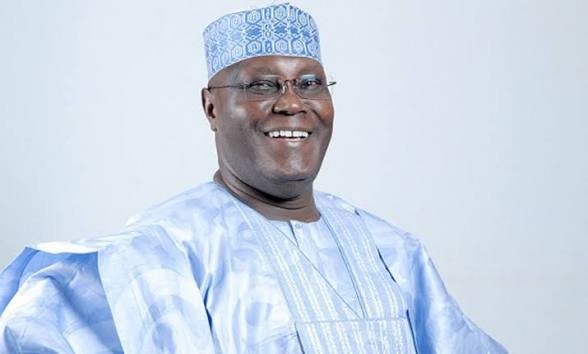
Nigeria’s 2027 political landscape is beginning to take shape as former Vice President Atiku Abubakar outlines both his final ambition for the presidency and a blunt assessment of regional political loyalties—comments that could redefine opposition strategy and coalition-building in the months ahead.
With political alignments already shifting, Atiku’s latest remarks introduce both urgency and finality into the 2027 race. His declaration not only signals a last attempt at the presidency but also exposes how deeply regional dynamics may influence the outcome.
On April 15, 2026, during an interview on Arise Television, Atiku made two major political statements:
• He confirmed that the 2027 general election will be his final attempt at becoming Nigeria’s president.
• He asserted that Northern Nigeria remains his strongest political base, while describing the South-East as aligned with Peter Obi and the South-South with Rotimi Amaechi.
Advertisement
Atiku pointed to his performance in previous elections—particularly his stronger showing in Northern states—as evidence that the region would “rally behind” him again. He also criticised the administration of Bola Tinubu, blaming current economic hardship for rising political dissatisfaction.
The statements come as Atiku plays a leading role within the African Democratic Congress (ADC), a platform increasingly discussed as a potential coalition vehicle ahead of 2027.
Atiku’s comments reveal more than confidence—they reflect a political calculation rooted in Nigeria’s long-standing regional voting patterns.
However, a closer look shows that relying on regional strongholds alone may not be sufficient. The 2023 elections demonstrated shifting dynamics, with urban youth participation, economic concerns, and third-force movements reshaping traditional voting blocs.
By acknowledging the South-East as Peter Obi’s base, Atiku appears to concede a major electoral zone while simultaneously reinforcing his dominance in the North. Yet the deeper issue is whether this fragmentation benefits or weakens the opposition.
What makes this more complex is the emerging role of coalition politics. With figures like Rotimi Amaechi and others operating within or around the ADC, the possibility of alliances could either consolidate votes or deepen divisions if not carefully managed.
Beyond the official statements, Atiku’s “last attempt” declaration introduces urgency into his campaign—but also raises questions about generational transition within Nigeria’s political class. Voters may interpret this as experience and persistence, or as a signal that a new political direction is overdue.
Atiku has contested the presidency multiple times since 1993, making him one of Nigeria’s most persistent presidential aspirants. His strongest performances have historically come from Northern states, where he maintains significant political networks.
Advertisement
In the 2023 election, regional voting patterns were more fragmented than in previous cycles, with increased competition across geopolitical zones. This trend suggests that while traditional strongholds remain relevant, they are no longer decisive on their own.
Meanwhile, Nigeria’s economic climate—marked by inflation, currency pressures, and rising living costs—has become a central campaign issue, likely to influence voter priorities more than regional loyalty alone.
The real concern now is whether Atiku can convert regional strength into a broad-based national coalition in what he describes as his final presidential run. With multiple opposition figures commanding influence across different regions, the path to 2027 may depend less on individual dominance and more on strategic alignment.
What happens next—particularly within opposition alliances—will determine whether these early signals translate into a unified challenge or another fragmented contest.
You must log in to comment or reply.
Comments