
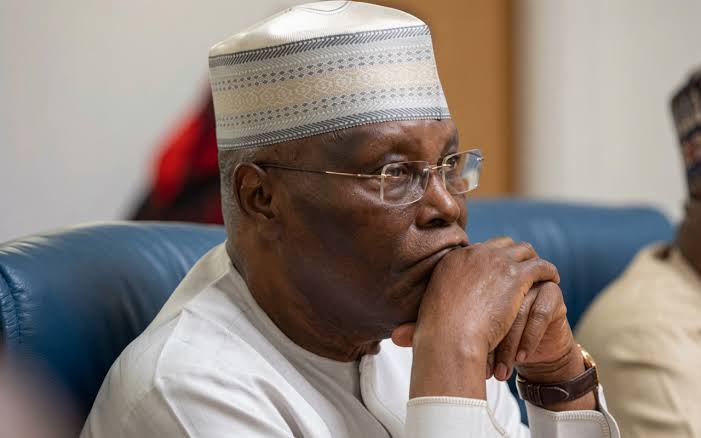
 Budget debates are often reduced to political exchanges between the government and the opposition. Yet every allegation of waste or duplication deserves attention because public budgets ultimately determine how taxpayer money is spent. Whether Atiku Abubakar's claims prove accurate or not, they have reignited an important conversation about transparency and accountability in Nigeria's public finances.
Former Vice President and African Democratic Congress (ADC) presidential candidate Atiku Abubakar has called on the National Assembly to carry out a comprehensive forensic review of the 2026 Appropriation Act following allegations of more than ₦210 billion in duplicated and overlapping budget allocations.
In a statement issued by his Senior Special Assistant on Public Communication, Phrank Shaibu, Atiku argued that the alleged budget irregularities undermine the Federal Government's economic reform narrative.
He questioned how duplicate allocations could appear in the budget after Nigerians had endured difficult reforms, including the removal of fuel subsidies, exchange-rate unification, higher taxes and increased tariffs.
The former vice president also referred to NNPC Limited's audited 2024 financial statements, claiming they showed ₦7.13 trillion spent on what the company described as "Energy Security Expenses," which he argued reflected continued petrol subsidy spending despite official claims that subsidies ended in 2023.
Atiku further urged the Auditor-General of the Federation, anti-corruption agencies and civil society organisations to independently examine the budget, identify those responsible for any duplicated allocations and recover improperly appropriated funds.
Advertisement
The Presidency had not publicly responded to the allegations at the time the statement was released, and no official forensic investigation has yet confirmed the alleged ₦210 billion duplication.
Atiku's intervention is as much about governance as it is about politics.
Opposition figures are expected to scrutinise government spending, particularly when economic reforms have imposed significant hardship on households and businesses. By linking the alleged duplicate allocations to inflation, unemployment and declining living standards, Atiku is framing fiscal management as one of the defining issues ahead of the 2027 elections.
However, the allegations also highlight a broader institutional question. Nigeria's budget process has repeatedly faced criticism over insertions, duplicated projects and constituency allocations. Similar concerns have surfaced under previous administrations, suggesting that the challenge extends beyond any single government.
If accurate, the alleged duplication would raise fresh concerns about legislative oversight, executive budget preparation and the effectiveness of existing financial controls. If disproved, it would underline the importance of verifying politically charged claims before they shape public perception.
From Atiku's perspective, the alleged ₦210 billion duplication reflects what he describes as fiscal indiscipline within the Tinubu administration. He argues that Nigerians cannot be asked to endure painful economic reforms while questions remain over the management of public resources.
Supporters of the government's broader economic agenda, however, are likely to argue that structural reforms—including subsidy removal and exchange-rate adjustments—are long-term measures designed to stabilise the economy, regardless of isolated allegations surrounding the budget.
Another perspective comes from governance advocates who see the issue less as a political contest and more as a transparency challenge. For them, the focus should not be on which political camp benefits from the controversy but on whether independent institutions verify the claims through credible investigations.
The differing narratives ultimately converge on one point: confidence in public finance depends on transparency, regardless of who is in power.
The political implications are immediate. Allegations surrounding the national budget are likely to intensify scrutiny of government spending as opposition parties prepare for the 2027 election cycle.
Advertisement
Economically, uncertainty over budget credibility can affect public confidence, investor sentiment and perceptions of fiscal discipline. While a single allegation does not prove systemic wrongdoing, repeated questions about budget implementation risk weakening trust in public institutions.
For ordinary Nigerians, particularly households and businesses already grappling with inflation and rising living costs, the debate is less about political rivalry than whether public funds are being managed efficiently.
The National Assembly also faces renewed pressure to demonstrate that its oversight function extends beyond approving budgets to ensuring their integrity after passage.
Ultimately, the question is not simply whether the alleged ₦210 billion duplication exists, but whether Nigeria's institutions can investigate such claims transparensively and without political influence. Public confidence in government spending depends as much on credible oversight as it does on sound economic policy. What happens next—whether through parliamentary scrutiny, independent audits or official responses—will shape not only this controversy but also public trust in the country's budget process.
You must log in to comment or reply.
Comments