
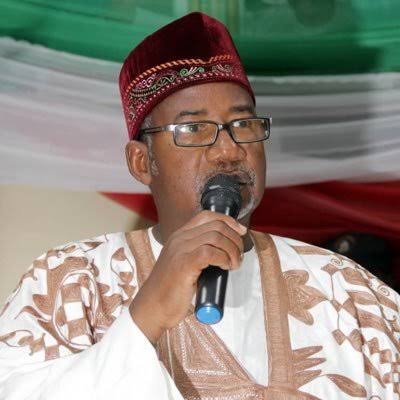
Tensions within the Bauchi chapter of the All Progressives Congress are exposing deeper cracks over how the party should handle talks linked to Governor Bala Mohammed’s political future. While consultations around possible realignment continue at national level, disagreements over structure control have now forced the party to set up a high-powered committee. The development underscores a broader struggle inside Nigeria’s opposition space ahead of the 2027 political cycle.
The Bauchi State caucus of the APC has been split over how to respond to political engagements involving Governor Bala Mohammed and potential realignment discussions ahead of future elections.
According to reporting by Vanguard Media Limited, members of the caucus met in Abuja where divergent views emerged on whether and how the governor should be politically accommodated. The disagreement led to the creation of a committee tasked with managing stakeholder positions and presenting conditions to the national leadership.
The committee is expected to engage key party figures, including senior officials and lawmakers, while ensuring that any negotiation process reflects internal consensus.
However, a parallel narrative reported by Daily Post Nigeria suggests that earlier discussions around the governor’s possible defection had already hit a deadlock due to disputes over a proposed power-sharing arrangement within the party structure.
Beyond the surface disagreement, the real issue is not just about Governor Bala Mohammed’s political direction—it is about control of party machinery in Bauchi State, which often determines electoral dominance in Nigeria’s political system.
In practical terms, whoever controls ward-level structures controls voter mobilization, candidate selection influence, and grassroots loyalty networks. This is why the reported “60/40” structure-sharing proposal became a sticking point.
Advertisement
However, what makes the situation more complex is that APC is simultaneously dealing with internal factional tensions in multiple states, meaning any major defection deal is not just about one governor—it becomes a national balancing act.
Politically, Bauchi is strategically significant in the North-East, and any shift involving a sitting governor would reshape:
• Opposition strength in the region
• PDP internal stability in the state
• APC’s expansion strategy ahead of 2027
Historically, similar negotiations in Nigerian politics—such as pre-election defections in 2014–2015 and 2018–2019 cycles—often involved informal power-sharing agreements, but these arrangements frequently broke down once electoral control became the core issue.
What is unfolding in Bauchi therefore reflects a recurring political pattern:
elite negotiations collide with grassroots party control realities.
Nigeria’s political realignment cycles often intensify midway between election periods. Between 2014 and 2015, major defections reshaped national power structures, contributing to the eventual 2015 electoral shift.
Recent political analysis suggests that over 30–40% of state-level political actors in Nigeria switch alliances between election cycles, particularly governors and legislators seeking strategic advantage.
In Bauchi, the stakes are higher due to:
• Strong PDP incumbency presence
Advertisement
• APC’s fragmented internal structure
• Rising influence of alternative political blocs ahead of 2027
The current dispute reflects not just a single negotiation failure, but a structural tension within Nigeria’s multi-party coalition system.
The real concern now is whether the newly formed APC caucus committee can convert internal disagreement into a unified position—or whether the division deepens ahead of broader 2027 alignment battles.
For Governor Bala Mohammed, the outcome of these political consultations may determine whether he remains a stabilizing force within his current platform or becomes a central figure in Nigeria’s next wave of political realignments.
What happens next in Bauchi will likely signal how prepared major parties are for another cycle of high-stakes political bargaining.
You must log in to comment or reply.
Comments