
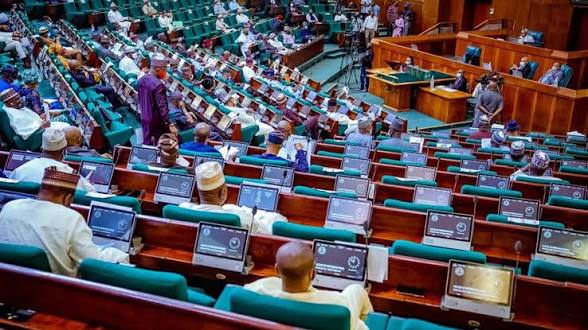
Electricity disruption across Edo, Delta, Ondo and Ekiti states has raised concerns about the ability of households, businesses and essential public services to cope with a prolonged power outage. The House of Representatives has reportedly called on the Federal Government to intervene in the industrial dispute between the National Union of Electricity Employees (NUEE) and the Benin Electricity Distribution Company (BEDC).
The intervention, reported by PUNCH on October 21, 2026, followed a motion of urgent national importance sponsored by Clement Jimbo, a member of the House from Akwa Ibom State. According to the report, lawmakers urged both parties to return to negotiations and called for arrangements to protect hospitals and other critical services while the dispute remains unresolved.
The development raises two important questions: how quickly can electricity supply be restored, and what must be done to address the disagreement between electricity workers and BEDC without exposing customers to repeated disruptions?
BEDC acknowledged the industrial action in a statement dated October 20, 2026, saying that the shutdown had disrupted its operations and electricity supply across its franchise area.
The company attributed the dispute to disagreements involving consequential salary adjustments following implementation of the national minimum wage, salary harmonisation and other employee welfare matters. BEDC also appealed to the union to suspend the industrial action and return to negotiations.
Reports published by Nigerian media organisations on October 19 and 20 also identified the dispute between NUEE and BEDC as the cause of the disruption affecting the four states.
These reports establish that the industrial dispute and electricity interruption were publicly acknowledged by the distribution company and covered by multiple news organisations.
However, the precise circumstances of the House of Representatives' intervention require a separate distinction. PUNCH reported that lawmakers adopted a motion calling for Federal Government intervention and directed relevant committees to investigate the shutdown. That specific parliamentary action has not been independently confirmed by the additional sources reviewed for this article.
The consequences of a prolonged blackout extend beyond the inconvenience of households losing access to electricity.
Small businesses that depend on refrigeration, lighting, electronic equipment and other electrical appliances may have to suspend operations or spend additional money on alternative power. For businesses operating with limited financial reserves, the cost of running generators can reduce already narrow profit margins.
Healthcare facilities face different risks. Hospitals, laboratories, maternity centres and emergency units may depend on electricity to operate equipment, preserve temperature-sensitive medical supplies and maintain essential services. The extent of the disruption will depend on the availability of generators, fuel, backup batteries and other contingency arrangements at individual facilities.
Advertisement
Telecommunications, water supply and banking services may also experience difficulties where the infrastructure supporting them depends on electricity affected by the shutdown.
These are potential consequences of a prolonged interruption, not evidence that every hospital, business or public service in the four states has experienced a complete shutdown.
The distinction matters because the actual impact depends on the duration of the outage, the availability of alternative power and the capacity of affected institutions to maintain operations.
The dispute highlights a difficult relationship between industrial negotiations and the public's dependence on electricity.
BEDC's statement identifies salary adjustments, harmonisation and employee welfare as central issues. These are matters that require negotiations between management and the workers' union, although the company's account alone does not establish the full position of NUEE on every disputed issue.
The union's demands, the company's response to those demands and the progress of negotiations are therefore important to understanding what would be required for a lasting settlement.
For electricity customers, the immediate concern is restoring supply. For the workers and the company, the dispute also concerns the terms under which employees are remunerated and their grievances addressed.
Resolving the immediate outage without addressing the underlying disagreement could leave the parties vulnerable to another confrontation. Conversely, negotiations that continue without an effective arrangement to maintain essential services could prolong the difficulties faced by customers.
The challenge for the parties and the relevant authorities is to address both concerns rather than treating electricity restoration and workers' welfare as unrelated issues.
According to reports, the House of Representatives called on the Federal Government, through relevant electricity-sector authorities, to intervene and facilitate an amicable resolution.
The report also states that the House directed its Committees on Power and Labour and Employment to investigate the circumstances surrounding the dispute, identify its immediate causes and recommend measures to prevent a recurrence.
If confirmed in the official parliamentary record, these steps would place the dispute under legislative scrutiny and could provide a channel for examining the conduct of the negotiations and the wider consequences of the shutdown.
The House also reportedly called for alternative power arrangements for hospitals, emergency medical facilities and other critical public services pending restoration of normal electricity supply.
However, a legislative call for intervention is not the same as a completed government intervention. The report does not establish that the Federal Government has issued a separate directive, that a settlement has been reached or that alternative power arrangements have been implemented.
Those developments would need to be confirmed independently.
The dispute also has implications for the local economies of the four affected states.
Businesses that rely on predictable electricity supply may face additional operating expenses when they turn to generators or other backup systems. Interruptions can also affect trading hours, production schedules, food preservation and the delivery of services.
THISDAY reported on October 21 that BEDC said it had lost more than ₦2 billion in revenue during the first two days of the industrial action. That figure should be understood as the company's reported estimate; the available report does not establish that the amount has been independently audited.
The wider economic cost may extend beyond the distribution company's revenue. Customers may incur additional expenses, while some businesses could lose sales or experience delays. However, a reliable estimate of the total financial impact across Edo, Delta, Ondo and Ekiti would require data that has not been established in the reports reviewed.
The duration of the dispute will be an important factor in determining how far those costs extend.
Several important questions remain unanswered.
First, what are NUEE's complete demands, and which specific issues remain unresolved between the union and BEDC management?
Advertisement
Second, have the parties agreed on a timetable for restoring electricity supply, or are negotiations still at an early stage?
Third, has the Federal Government formally intervened following the reported House of Representatives motion?
Fourth, has the House's resolution been documented in an official record, and have its committees begun the proposed investigation?
Finally, what measures are currently available to protect hospitals and other essential services if the disruption continues?
Answers to these questions would help establish whether the situation is moving towards a settlement or whether customers should prepare for a longer interruption.
The immediate priority is restoring electricity supply while negotiations continue over the issues that triggered the industrial action.
BEDC and NUEE need to communicate clearly about the status of their discussions and any arrangements affecting customers. The relevant authorities may also need to facilitate negotiations if the parties cannot reach an agreement on their own.
The reported parliamentary intervention could provide an additional avenue for scrutiny, but confirmation of the motion and any subsequent committee action would help establish what steps lawmakers have formally taken.
For residents and businesses across Edo, Delta, Ondo and Ekiti, the most important developments to watch are an agreed settlement, an official announcement about the restoration of electricity and evidence that the underlying labour dispute has been addressed.
Until those developments are confirmed, the duration of the disruption and the timing of a full restoration remain uncertain.
You must log in to comment or reply.
Comments