
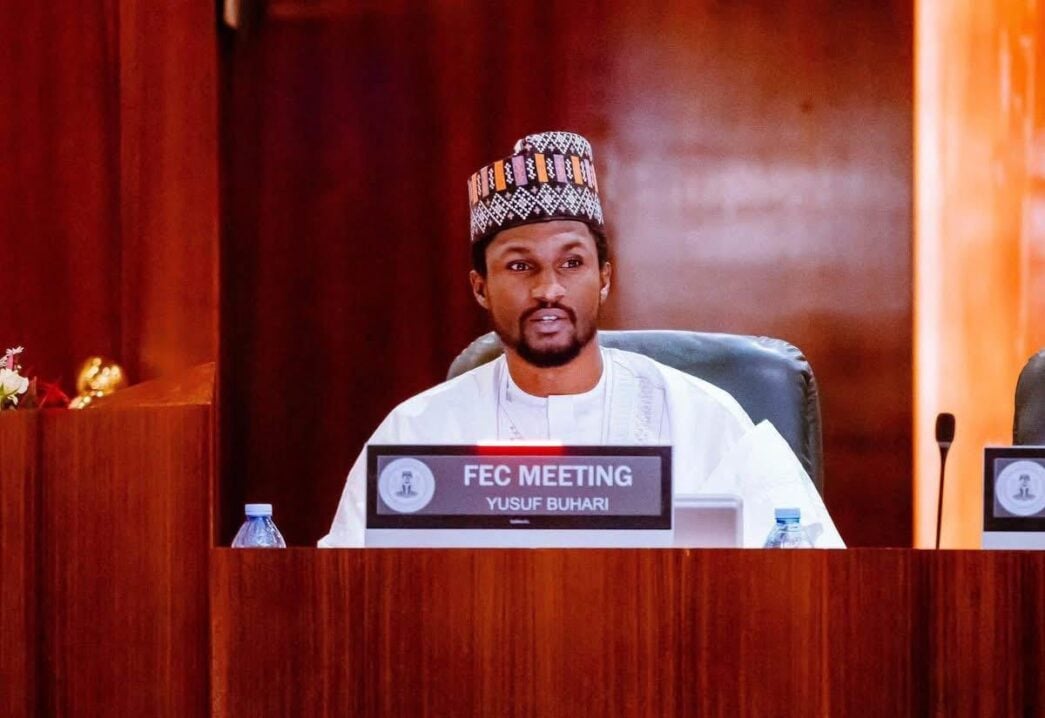
Yusuf Buhari’s entry into frontline politics signals a new phase for Nigeria’s ruling party dynamics ahead of the 2027 elections. His move, coming less than a year after the death of his father, raises fresh questions about political legacy, influence, and voter expectations in northern Nigeria.
At a time when parties are quietly consolidating structures for 2027, this development places the Buhari name back at the center of electoral calculations—particularly in Katsina State, a long-standing stronghold of the All Progressives Congress.
On April 3, 2026, Yusuf Buhari formally declared his intention to contest for the House of Representatives seat representing Sandamu/Daura/Mai’Adua Federal Constituency. His decision, communicated through a letter to party stakeholders, emphasized “wide consultations” and a commitment to infrastructure and human capital development.
The announcement was later reinforced by Bashir Ahmad, who confirmed that the move followed internal discussions within the APC network. Days earlier, local party stakeholders in Sandamu had already endorsed Yusuf as their preferred candidate—an early signal that his candidacy may face limited resistance within party ranks.
Advertisement
However, a closer look shows that while most local reports frame this as a routine political declaration, the broader implications are more layered. Coverage from platforms like Vanguard and Daily Post largely emphasized the announcement and endorsements but paid less attention to what Yusuf Buhari’s candidacy represents in the evolving structure of Nigerian politics.
Beyond the official statements, this development reopens the conversation around political succession and inherited influence. While Nigeria operates a democratic system, political families have increasingly shaped candidate emergence across parties. Yusuf Buhari’s entry reflects this trend, especially in northern constituencies where name recognition and legacy often carry electoral weight.
Yet the deeper issue is not just about legacy—it is about expectations. Unlike his father, Muhammadu Buhari, who built a long military and political career before presidency, Yusuf Buhari enters the race without prior elective experience. This creates a dual narrative: for supporters, he represents continuity and familiarity; for critics, a test of merit versus political inheritance.
What makes this more complex is the timing. With early endorsements already aligning behind figures like Bola Tinubu for a potential second term and Dikko Radda at the state level, Yusuf’s candidacy fits into a broader APC strategy of consolidating strongholds rather than opening competitive primaries.
Historically, Katsina has played a strategic role in national elections. During the 2015 and 2019 cycles, voter turnout and bloc voting patterns in the state significantly boosted APC’s national performance. Replicating that structure in 2027 may depend not just on party loyalty, but on whether new candidates can translate legacy into tangible political value.
Data from previous election cycles suggests that constituencies with strong political lineage candidates often see higher initial support but face increased scrutiny during campaigns, particularly among younger voters. In a political environment shaped by economic pressure, unemployment, and rising public demand for accountability, symbolic capital alone may not guarantee electoral success.
Advertisement
That framing leaves out a key uncertainty: how voters in Sandamu/Daura/Mai’Adua will respond once the campaign shifts from endorsement to direct engagement. Issues such as local development, job creation, and infrastructure delivery are likely to dominate voter concerns, potentially redefining the weight of political heritage.
The real test now is whether Yusuf Buhari can move beyond recognition and build a credible political identity of his own. As 2027 approaches, his candidacy will not just be measured by party support, but by how effectively he navigates the expectations tied to one of Nigeria’s most prominent political names.
You must log in to comment or reply.
Comments