
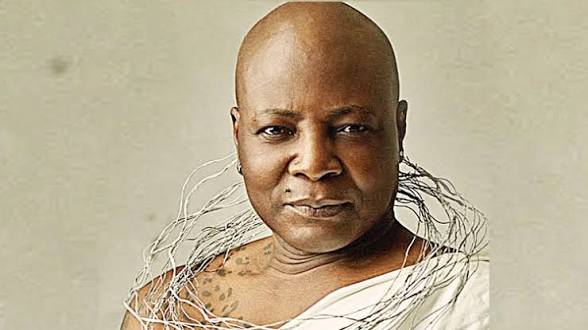
Nigeria’s often heated political debates spilled into another public confrontation this week after entertainer and activist Charles Oputa, widely known as Charly Boy, accused activist and former presidential candidate Omoyele Sowore of secretly working for the ruling All Progressives Congress.
The accusation came after Sowore criticised the performance of Alex Otti, the governor of Abia State, triggering a wave of reactions across Nigeria’s political and social media circles.
The dispute began when Sowore publicly criticised Otti’s administration, describing the Abia governor’s reforms as insufficient. According to him, the changes unfolding in the state amount to what he described as “half transformation,” arguing that the government had yet to deliver the kind of sweeping improvements many supporters expected.
His remarks quickly drew responses from supporters and critics alike. Among the most forceful reactions came from Charly Boy, a long-time political activist known for outspoken commentary on governance and civic issues.
Advertisement
Posting on the social media platform X, Charly Boy dismissed Sowore’s assessment and questioned his motives. In the post, he described the activist as a “snake in the grass” and went further to allege that Sowore was acting as a covert ally of the ruling party.
The claim was framed as a personal assessment rather than evidence-based accusation, but it nevertheless added a fresh layer of tension to the already polarised online debate.
Several Nigerian online news platforms reported the exchange largely as a direct clash between two outspoken public figures. Most accounts highlighted the sharp language used in the exchange while focusing on the accusation itself.
However, that framing tends to overlook the broader context behind the disagreement — the increasingly intense scrutiny of Governor Otti’s performance since he assumed office.
Otti, elected on the platform of the Labour Party, has attracted both praise and criticism as he attempts to reposition Abia’s economy and infrastructure. Supporters point to ongoing reforms and administrative changes, while critics argue that progress has not yet matched the high expectations created during the election campaign.
Within that context, Sowore’s comments appear to reflect a broader debate about governance standards and political accountability, rather than a simple personal dispute.
Advertisement
Both Charly Boy and Sowore share a history of activism and public protests. They were visible figures during the high-profile “Resume or Resign” protests during the administration of former president Muhammadu Buhari.
Yet the latest exchange shows how alliances within Nigeria’s activist community can fracture when political assessments diverge.
The growing role of social media has amplified these confrontations, often turning policy disagreements into viral political disputes that quickly dominate public conversation.
You must log in to comment or reply.
Comments