
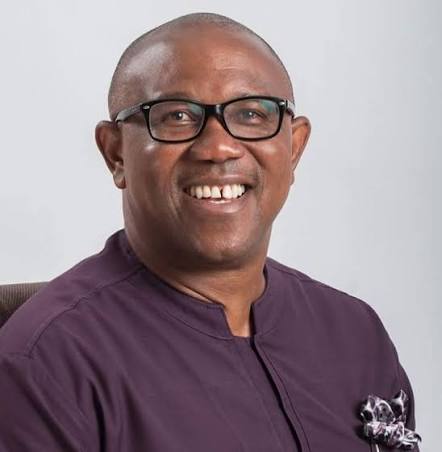
Nigeria’s growing debate over human capital development resurfaced on Children’s Day as former presidential candidate Peter Obi renewed calls for urgent investment in education, healthcare, and child welfare. His message highlights a widening concern among policymakers and analysts: the country’s future competitiveness depends heavily on how it treats its youngest population today.
On May 27, 2026, Peter Obi, the presidential candidate of the Nigeria Democratic Congress (NDC) for the 2027 election, released a Children’s Day message addressing Nigerian children across the country. In the statement, he congratulated them on the celebration and emphasized the importance of protecting and nurturing their potential.
Obi described Nigerian children as central to the country’s future, noting that they represent “talent, energy and resilience” that must not be wasted due to systemic neglect.
He stated:
Advertisement
“Each time I look into the eyes of a child in Nigeria… I see future scientists, tech innovators, leaders and builders who can stand toe-to-toe with the world if given access to the right resources.”
He also warned that failing to invest in children amounts to “borrowing from our future,” stressing that education and healthcare should not be treated as privileges but as fundamental rights.
Beyond the ceremonial tone of Children’s Day messages, Obi’s intervention reflects a recurring national fault line—Nigeria’s long-standing underinvestment in human capital.
What makes this particularly significant is the economic context. Nigeria continues to face one of the highest rates of out-of-school children globally, alongside strained healthcare access for rural and low-income communities. Analysts often link these conditions to weak productivity growth and long-term dependency on resource-based revenue.
Obi’s framing aligns with a broader economic argument: countries that prioritize early education and child welfare tend to transition faster into innovation-driven economies. In contrast, nations that neglect foundational development often struggle with unemployment cycles and low industrial output.
Historically, Nigeria has made similar commitments. In previous administrations, education budgets were repeatedly increased on paper but struggled in implementation due to funding gaps, infrastructure deficits, and policy inconsistency. The result is a widening gap between policy ambition and ground-level outcomes.
What is particularly notable is how this debate now intersects with political positioning ahead of the 2027 election cycle. Education, healthcare, and youth development are increasingly becoming central campaign themes, especially among opposition figures seeking to redefine governance priorities.
Nigeria currently has one of the largest populations of out-of-school children in the world, with millions still outside formal education systems. Public health spending remains below global recommended benchmarks, while demographic projections show that Nigeria’s youth population will continue to grow rapidly over the next two decades.
Advertisement
Past development patterns suggest that without sustained investment in education and healthcare, economic growth may not translate into broad-based prosperity, increasing inequality and social pressure.
As Nigeria marks another Children’s Day, the gap between symbolic celebration and structural reality remains wide. The real test now lies not in speeches, but in whether policy shifts can translate into measurable improvements in classrooms, hospitals, and child welfare systems across the country.
With the 2027 political season approaching, child development may no longer remain just a social issue—but a defining benchmark for leadership credibility.
You must log in to comment or reply.
Comments