
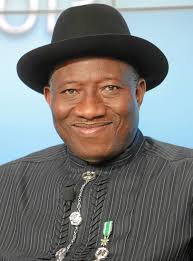
The legal battle over former President Goodluck Jonathan’s possible return to the ballot box has taken a fresh turn, with a Federal High Court in Abuja postponing proceedings in a suit seeking to bar him from contesting the 2027 presidential election.
While the case is still at a preliminary stage, it has reopened one of Nigeria’s most sensitive constitutional debates: whether a president who completed another leader’s tenure and later won a full term can lawfully seek office again under the 1999 Constitution.
A Federal High Court sitting in Abuja on Friday adjourned until May 11, 2026, the suit challenging Jonathan’s eligibility to contest the 2027 presidential election.
The matter, presided over by Justice Peter Lifu, was postponed after counsel to the plaintiff, Ndubuisi Ukpai, informed the court that he had only recently been served with a preliminary objection filed by the defence and needed time to respond.
The suit was instituted by lawyer Johnmary Jideobi, who is asking the court to declare Jonathan constitutionally ineligible to run for president again. The plaintiff is also seeking an order restraining the former president from presenting himself to any political party as a presidential candidate, as well as a directive preventing the Independent National Electoral Commission from accepting or publishing his name for the election.
Jonathan’s lawyer, Chris Uche (SAN), told the court he initially learned about the matter through media reports and had since moved to ensure all relevant legal documents were properly filed.
Uche also questioned why the issue was resurfacing, arguing that similar constitutional questions surrounding Jonathan’s eligibility had previously been considered by both the Federal High Court and the Court of Appeal.
Advertisement
At the centre of the legal dispute is the interpretation of Section 137(3) of the 1999 Constitution, particularly whether Jonathan’s completion of late President Umaru Musa Yar'Adua’s tenure in 2010, followed by his election victory in 2011, already exhausted the constitutional limit allowed for a president.
The plaintiff argued in court filings that permitting Jonathan to contest again could amount to taking the presidential oath of office for a third time, which he claims violates constitutional provisions.
However, a closer look shows that the matter is far from legally settled in the public space, despite recurring debates over Jonathan’s political future.
The deeper issue is not simply whether Jonathan can legally contest again, but what the case reveals about Nigeria’s evolving political landscape.
Jonathan remains one of the few former Nigerian presidents whose post-office image has largely remained stable across political divides. His increasing visibility in diplomatic and democratic engagements across Africa has also kept his name politically relevant years after leaving office in 2015.
That relevance explains why recurring speculation about a potential comeback continues to generate national attention, especially at a time when many Nigerians remain frustrated by economic hardship, inflation, insecurity, and political polarisation.
What makes the situation more complex is that the Constitution itself has been interpreted differently by legal experts over the years.
Supporters of Jonathan’s eligibility often point to the 2018 constitutional amendment introduced after his tenure. The amendment states that anyone who takes the presidential oath to complete another president’s term and then wins a single election cannot seek office again if the combined period exceeds eight years.
Critics, however, argue that Jonathan’s circumstances still fall within the constitutional restriction because he already completed Yar’Adua’s tenure before serving a full elected term.
That legal ambiguity is likely to keep the debate alive regardless of the eventual court ruling.
Beyond the courtroom drama, the renewed attention on Jonathan could reshape conversations within opposition circles and the broader Nigerian political establishment.
Several political actors are already positioning for 2027 amid economic challenges that continue to pressure households and businesses nationwide. Rising inflation, currency instability, unemployment, and subsidy-related hardship have significantly altered public expectations from political leaders.
Advertisement
In that environment, any figure perceived as capable of attracting cross-party support instantly becomes politically significant — even without formally declaring ambition.
A prolonged legal dispute over Jonathan’s eligibility could therefore influence coalition negotiations, party calculations, and voter sentiment long before the official campaign season begins.
Nigeria has witnessed similar constitutional controversies before. Debates over presidential succession, zoning, and tenure interpretation have repeatedly shaped political alignments since the return to democratic rule in 1999.
However, this case arrives at a particularly sensitive moment when trust in political institutions remains under pressure and voters are increasingly focused on governance outcomes rather than party loyalty alone.
The court is expected to reconvene on May 11, when parties may begin substantive arguments on the constitutional questions raised in the suit.
For now, no court has ruled Jonathan ineligible, and the former president has not officially declared his intention to contest the 2027 election.
You must log in to comment or reply.
Comments