
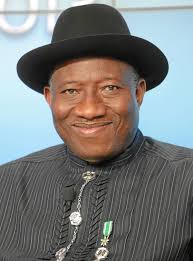
Former President Goodluck Jonathan’s potential role in Nigeria’s 2027 presidential race has returned to public debate after a Federal High Court in Abuja sharply criticised the handling of a lawsuit seeking to block him from contesting.
The case, which has dragged for months without key parties being properly served, exposed growing judicial frustration over delays in politically sensitive cases as the country edges closer to another election cycle.
Justice Peter Lifu on Friday rebuked plaintiff Johnmary Jideobi and his lawyer, Ndubuisi Ukpai, over what the court described as a lack of diligence in prosecuting the suit filed against Jonathan’s possible participation in the 2027 presidential election.
The judge awarded a ₦1 million cost against the plaintiff in favour of the former president after observing repeated delays and procedural failures since the case was filed on October 6, 2025.
Delivering his remarks in court, Justice Lifu said:
“The plaintiff, who filed this suit on October 6, 2025, and has not deemed it fit to serve, is hereby granted grace of two hours from now to serve all the processes to the 2nd and 3rd defendants.”
The court also ordered the Independent National Electoral Commission (INEC) and the Attorney-General of the Federation (AGF) to respond before the next hearing scheduled for May 18, 2026.
According to proceedings, the judge expressed surprise that six months after the suit was initiated, neither INEC nor the AGF had been properly served with originating court documents.
Advertisement
The situation became more controversial after Jonathan’s lawyer, Chief Chris Uche (SAN), informed the court that his client only became aware of the lawsuit through media reports before independently filing a response.
Midway into Friday’s proceedings, Ukpai arrived in court and apologised for his lateness, saying:
“My lord, I am sorry. I am for the plaintiff. Our vehicle broke down on the way.”
However, the explanation did little to ease the court’s concerns about delays already affecting the politically sensitive matter.
Yet the deeper issue is not merely whether Jonathan can legally contest again. The case reflects how early political manoeuvring ahead of 2027 is already entering Nigeria’s judicial system long before parties officially begin presidential primaries.
Nigeria’s courts increasingly find themselves handling disputes tied to elections years before voting begins, placing pressure on judges to move quickly while maintaining procedural fairness.
Justice Lifu acknowledged this concern directly by referencing INEC’s timetable and the judiciary’s obligation to fast-track political cases.
However, a closer look shows the court’s frustration also points to a broader institutional problem: politically charged lawsuits are sometimes filed for strategic media attention rather than immediate legal resolution.
That framing leaves out another important dimension — Jonathan himself has not publicly declared any intention to contest the 2027 election. Despite persistent speculation, the former president has largely remained silent on presidential ambitions.
Still, his name continues to carry political weight across party lines because of his post-presidency reputation and Nigeria’s shifting political alliances.
The legal argument surrounding Jonathan’s eligibility stems from constitutional term-limit interpretations linked to his succession after the death of former President Umaru Musa Yar’Adua in 2010.
Jonathan later won the 2011 presidential election and served until 2015.
Since then, debates have resurfaced periodically over whether the years spent completing Yar’Adua’s tenure should count toward the constitutional two-term limit for Nigerian presidents.
Nigeria witnessed similar constitutional debates before the 2015 elections, although courts at the time dismissed efforts aimed at disqualifying Jonathan.
Advertisement
Political analysts say renewed legal actions ahead of 2027 may reflect wider uncertainty over possible alliances, zoning arrangements, and succession battles already emerging within major political parties.
What makes this more complex is that Jonathan remains one of the few former Nigerian leaders who retains broad cross-regional appeal, making even speculative candidacy discussions politically consequential.
The case also highlights growing pressure on Nigeria’s judiciary as election-related litigation continues expanding years ahead of major polls.
Election lawyers note that procedural delays, late filings, and service disputes often complicate politically sensitive cases, especially when lawsuits attract public attention before parties fully comply with court processes.
The judge’s decision to impose financial penalties, while lower than the ₦5 million requested by Jonathan’s legal team, signals that courts may become less tolerant of delays in politically exposed matters.
The ultimate concern now is whether the substantive case proceeds quickly enough to avoid becoming another prolonged political courtroom battle that shapes public perception more than constitutional clarity.
You must log in to comment or reply.
Comments