
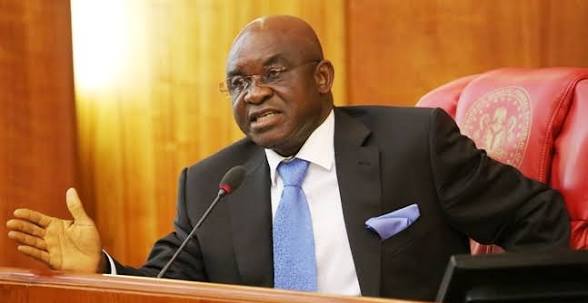
Nigeria’s worsening insecurity has again become the focus of political debate after former Senate President David Mark warned that the ruling All Progressives Congress (APC) lacks the capacity to decisively address the crisis. His remarks come at a time when communities across several states continue to confront banditry, kidnappings, and violent attacks that have displaced thousands.
Speaking in Abuja during a meeting with political stakeholders and supporters, Mark argued that despite repeated assurances from the federal government, the country’s security situation remains deeply troubling. The veteran politician said Nigerians deserve leadership capable of protecting lives and restoring confidence in the nation’s security architecture.
According to Mark, the fundamental duty of government is the protection of lives and property, and failure in that responsibility erodes public trust. He insisted that the current administration has yet to demonstrate the level of effectiveness required to confront insecurity across the country.
Advertisement
Other Nigerian political reports and commentary have framed Mark’s criticism as part of a broader opposition narrative ahead of future elections. Some outlets focused primarily on the political implications of his remarks, while others placed them within a longer pattern of criticism from opposition figures who argue that insecurity and economic hardship have worsened under the APC government.
However, a closer look shows that the debate goes beyond partisan politics. Nigeria has struggled with multiple security threats for more than a decade — including insurgency in the northeast, banditry in the northwest, farmer-herder conflicts in central states, and increasing kidnappings in parts of the south. These challenges have continued across successive administrations, complicating efforts to assign responsibility to any single government.
Mark’s comments also echo a broader concern expressed by several political leaders and analysts that insecurity has far-reaching economic consequences. Attacks on rural communities disrupt farming and food supply chains, while kidnappings and violent crime undermine investor confidence and local business activity.
Yet the framing of the issue is contested. Supporters of the ruling party have previously rejected accusations that the government lacks direction, arguing that complex reforms and security operations are underway to stabilise the country and strengthen long-term economic resilience.
Advertisement
That tension between criticism and defence reflects the broader political landscape as Nigeria moves closer to the next election cycle. Security, economic hardship, and governance performance are expected to dominate public debate, with opposition figures seeking to present alternative approaches while the ruling party defends its record.
What authorities do next — both in terms of security operations and policy reforms — will likely shape public perception in the months ahead. For many Nigerians, the central question remains less about political rhetoric and more about whether government action can deliver tangible improvements in safety and stability.
You must log in to comment or reply.
Comments