
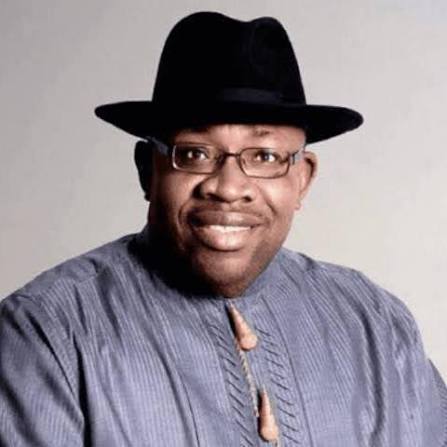
 In a major political development that could reshape the opposition landscape ahead of the 2027 general elections, Senator Seriake Dickson, former Governor of Bayelsa State, has formally exited the Peoples Democratic Party (PDP) to join the newly registered Nigeria Democratic Congress (NDC) — yet he insists he is not eyeing the presidency in 2027.
 Dickson made the announcement in Abuja during a press briefing where he framed his move as part of a broader project to rebuild a credible political platform, rather than a personal power grab. He argued that a stagnant PDP — weakened by internal crisis, defections, and leadership disputes — cannot effectively challenge the ruling All Progressives Congress (APC) without a fresh alternative.
“Our focus is not on the presidency right now,” Dickson stated, emphasizing that the priority for the NDC is to forge a national platform capable of attracting Nigerians across regional and ideological divides.
Yet beyond Dickson’s assertion lies a deeper tension: his defection underscores the fracturing of Nigeria’s main opposition at a critical junction. The PDP has seen a spate of defections in recent months, driven by leadership struggles and disagreements over zoning and party strategy — factors spotlighted in recent legal battles over party conventions and factional control.
Advertisement
Most national outlets reporting Dickson’s defection have focused on the event itself — a seasoned lawmaker leaving a major party to join a new one. However, few have fully contextualized the larger political calculus: Nigeria’s opposition space is under strain from multiple fronts — defections to the ruling APC, emerging third-party movements, and internal PDP disputes — all of which weaken a unified challenge to the incumbent.
What makes Dickson’s move particularly consequential is not just the creation of another political platform, but its timing. With the 2027 election timetable already in play and public dissatisfaction with economic hardships rising, opposition groups are racing to coalesce into viable alternatives. The NDC stakes its identity on being a fresh, unburdened platform — one that, according to its interim leadership, could attract politicians disillusioned with old party structures.
Still, the question remains: Can a nascent party like the NDC convert structural dissatisfaction into electoral strength? Political analysts point to Nigeria’s electoral history, where new parties have struggled to break the dominance of the APC and PDP due to entrenched networks and financial resources. Others argue that the opposition’s fragmentation — reflected in Dickson’s departure — may ultimately favor the incumbent president, President Bola Tinubu, whose re-election campaign is already galvanizing support within and beyond party lines.
As Dickson extends an open invitation to politicians across Nigeria to join the NDC, the real test now will be whether the new party can unify a scattered opposition into a cohesive force, and whether it can translate that unity into voter support in 2027.
You must log in to comment or reply.
Comments