
As tensions deepen across the Middle East, the battlefield is no longer confined to missiles, warships, and airstrikes. According to U.S. President Donald Trump, the latest front in the confrontation with Iran is the information war — where artificial intelligence and viral media may shape global perception as much as military power.
His latest accusation highlights a growing concern among Western governments: that digital propaganda may be redefining how modern conflicts are fought and understood.
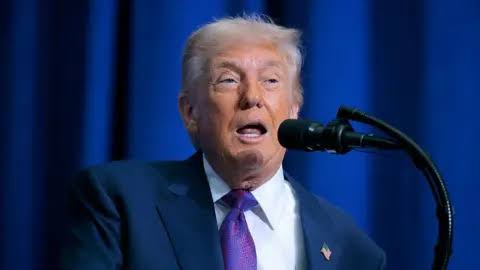
In a statement posted on the social platform Truth Social, President Donald Trump accused Iran of orchestrating what he described as sophisticated propaganda campaigns designed to exaggerate its battlefield success against the United States and Israel.
Trump argued that while Iran’s military capacity remains limited compared to Western forces, the country has become “extremely effective” at manipulating information ecosystems.
According to the U.S. leader, Iranian networks are increasingly circulating AI-generated images and videos purporting to show successful attacks on American military assets.
Advertisement
Among the claims he dismissed were:
• Videos allegedly showing “kamikaze boats” striking naval vessels
• Reports that multiple U.S. refueling aircraft had been destroyed
• Social media posts suggesting the American aircraft carrier USS Abraham Lincoln (CVN-72) had been damaged or set ablaze
Trump insisted the reports were false, adding that U.S. aircraft remained operational and that the carrier had not even been targeted.
The dispute underscores how conflicts are increasingly fought on two fronts — the physical battlefield and the digital narrative.
Military analysts say countries now deploy information operations to shape public perception, influence allies, and undermine adversaries. With the rise of generative AI, producing convincing but fabricated war footage has become easier and faster than ever.
For governments involved in tense standoffs such as the one between Iran, Israel, and the United States, controlling the narrative can be strategically valuable. Images of successful attacks — real or fabricated — can boost domestic morale, influence global opinion, and create uncertainty about the true state of the conflict.
Advertisement
What complicates matters further is the speed of social media. Viral footage can spread worldwide before military officials have time to verify or debunk it.
Beyond the political rhetoric, the episode highlights a deeper strategic shift. Modern warfare increasingly involves competing versions of reality, where governments attempt to influence what the world believes about events on the ground.
Whether Iran is actually deploying AI propaganda in the way Trump claims remains unproven. But security analysts agree on one point: the next generation of geopolitical competition will not be fought solely with weapons — it will also be fought with algorithms, digital narratives, and information control.
You must log in to comment or reply.
Comments