
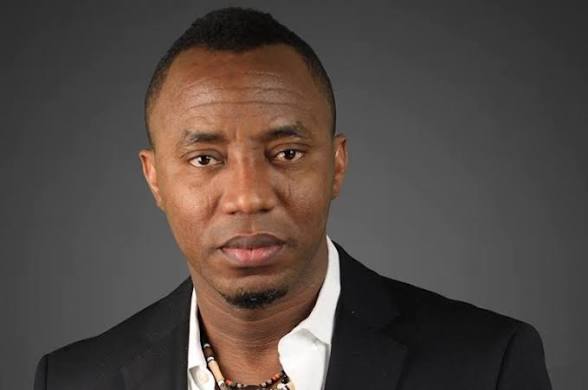
 The Department of State Services (DSS) is seeking to put its criminal case against African Action Congress (AAC) presidential candidate Omoyele Sowore on hold until after the 2027 election, creating a new legal and political turn in a case that began with social-media comments about President Bola Tinubu.
The development is significant because the prosecution itself is now seeking a delay during an election period in which Sowore intends to participate as a presidential candidate. But the case has not been withdrawn, and the DSS cannot simply determine that a Federal High Court proceeding has ended or been suspended without the court addressing the application.
Multiple Nigerian news organisations reported that DSS Director-General Tosin Ajayi directed the agency's counsel, Akinlolu Kehinde, SAN, to seek an adjournment or temporary suspension of the proceedings until after the election. Premium Times also reported the DSS media unit as confirming that Ajayi directed counsel to take steps to suspend the case temporarily.
That leaves a central question unresolved: will the DSS merely ask the court for more time, or will the government ultimately withdraw the prosecution altogether?
The immediate development is not a judgment terminating Sowore's case.
Rather, the DSS has instructed its counsel to approach the Federal High Court and request that proceedings be adjourned until after the 2027 presidential election. Reports say the decision followed discussions involving Ajayi, Kehinde and senior officials in the DSS legal directorate.
The stated reason is electoral rather than an admission that the allegations against Sowore have been abandoned.
According to reports on the DSS position, the agency wants Sowore to be able to participate fully in the electoral process without the criminal proceedings becoming an obstacle to his campaign. The DSS has also reportedly considered the fact that the case has already spent considerable time before the court.
This distinction matters.
An adjournment postpones proceedings. A withdrawal or discontinuance would represent a fundamentally different legal development. As of the latest reporting, the DSS has announced or confirmed an intention to seek a pause; the court has not been reported as having entered an order finally terminating the case.
The dispute dates back to August 2025, when Sowore published social-media comments referring to President Bola Tinubu as a “criminal.”
The DSS subsequently demanded that the posts be removed and sought a judicial determination concerning whether the comments violated Nigerian law. The agency's case was subsequently amended, with Sowore left as the sole defendant after X and Meta were removed from the proceedings.
The case has been described in different reports using terms including cyberbullying, cybercrime, cyberstalking and criminal defamation. The precise legal characterisation should therefore be taken from the amended charge and court record rather than from shorthand descriptions used in headlines.
Sowore pleaded not guilty to the amended charges, while his defence has consistently challenged the prosecution.
The proceedings have also involved disputes over evidence and the role of senior government lawyers.
In July, for example, Attorney-General of the Federation Lateef Fagbemi appeared in the case and challenged an attempt by the defence to subpoena the DSS director-general. The defence, led by Adeyinka Olumide-Fusika, objected to the manner in which the AGF entered the proceedings, arguing that the prosecution's change in representation should have been properly communicated.
The dispute was eventually overtaken by an agreement that another DSS official could address the relevant evidence, and the request for Ajayi's personal testimony was withdrawn.
The strongest disagreement now concerns what should happen to the case during the election.
Advertisement
The AAC has rejected the proposed suspension and called instead for the prosecution to be completely discontinued. The party argued that leaving the case pending could allow it to remain a source of legal uncertainty over Sowore during the election period.
Sowore himself has also called for the withdrawal of the case and an apology from the DSS. Speaking to Channels Television on Monday, he argued that his defence had previously raised the electoral implications of continuing the trial.
Separately, Vanguard reported comments from Sowore's lead counsel, Olumide Fusika, who criticised the way the DSS communicated its proposed suspension. According to that report, Fusika said the defence team learnt of the development through media reports rather than through a formal communication from the prosecution.
Vanguard further reported that Fusika urged the DSS either to withdraw the charge entirely or transfer the matter to the Attorney-General of the Federation. Those specific comments are being attributed here to Vanguard because they have not been independently reproduced in the other major reports reviewed for this article.
The broader demand for withdrawal, however, is independently corroborated by the AAC and by Sowore's own public comments.
The DSS's decision does not remove the Federal High Court from the process.
The prosecution can ask for an adjournment, but the court must determine what happens to the proceedings. That is particularly important because the case is already before a judge and has progressed beyond the initial filing stage.
Reports indicate that the DSS position is expected to be formally communicated to the court when the Federal High Court resumes normal proceedings after its annual judicial vacation. Several reports have identified September 14, 2026, as the expected date for the matter to return to court.
Until the court considers the application, describing the case as legally “suspended” can therefore be misleading.
The more precise description is that the DSS intends to ask the court to pause the proceedings.
The timing is important because the defendant is not simply a political activist facing a criminal proceeding outside an election cycle.
Sowore is seeking the presidency under the AAC, meaning the continuation of a criminal trial during the election campaign could have political and practical consequences for his participation.
The DSS says its proposed pause is intended to avoid that problem. That position is materially different from saying that the allegations against Sowore have been disproved or that the prosecution accepts the defence's legal arguments.
The electoral context is also independently established. INEC has formally begun preparations for the 2027 general election and lists the presidential election among the upcoming national polls.
The significance is therefore procedural as much as political: the court will have to balance the prosecution's request for additional time with the need to determine how an existing criminal proceeding should proceed while the defendant is participating in an election.
Another reason the proposed suspension deserves scrutiny is the explanation previously associated with the prosecution.
The DSS had maintained that its intervention was not simply about Sowore's political activities. Reports on the case said the agency sought a judicial determination on whether it was lawful to publicly describe the President or another person as a “criminal” without a conviction.
The agency had also previously argued, in correspondence concerning Sowore's posts, that its responsibilities concerning presidential security extended beyond physical threats.
That earlier justification makes the present development noteworthy.
If the purpose of the case is principally to obtain a judicial interpretation of the legality of the disputed statements, postponing proceedings until after an election does not by itself resolve that legal question. It simply changes the timing of when the court may be asked to determine it.
That is one reason the defence and the AAC are asking for a different outcome.
There are now three identifiable positions in the dispute.
The DSS position:
The agency wants the proceedings paused so that Sowore can participate in the 2027 electoral process without the case becoming an impediment.
The AAC and Sowore position:
They want the prosecution discontinued rather than temporarily suspended. The AAC has also demanded that the government not leave the case hanging over its candidate during the election.
The court's position:
There has not yet been a reported final judicial decision on the proposed suspension. The court therefore remains the institution that must determine the procedural consequence of whatever application the prosecution files.
These positions should not be confused with findings about whether Sowore committed the alleged offences. The proposed suspension is not an acquittal, and the defence's demand for withdrawal is not itself a judicial finding that the prosecution is unlawful.
The immediate effect, if the court grants the requested adjournment, would be to remove the active trial from the most sensitive phase of Sowore's presidential campaign.
That could give the candidate greater freedom to campaign without having to deal with regular court proceedings at the same time.
But a postponement would also leave the underlying dispute unresolved.
The allegations would remain before the court, rather than being finally determined. The constitutional and statutory questions surrounding the prosecution would therefore remain available for determination after the election.
The development is consequently best understood as a change in timing, not a resolution of the underlying case.
It also places greater importance on the court's eventual response. If the prosecution seeks an adjournment, the judicial record should make clear whether the request is granted, on what terms, and when the case will resume.
Advertisement
Several important questions remain unanswered.
First, what exactly will the DSS ask the court to order?
The public reporting uses both “suspension” and “adjournment.” The precise application and its legal basis will become clearer when the prosecution formally approaches the court.
Second, will the DSS eventually withdraw the case?
There is currently no confirmed announcement that the charge has been permanently withdrawn.
Third, will the Attorney-General of the Federation take over or discontinue the prosecution?
The possibility has been raised by Sowore's defence, but no confirmed decision to do so has been established in the reports reviewed.
Fourth, how will the court deal with the defence's objection to simply postponing the case?
That question can only be resolved through the judicial proceedings.
Finally, what happens to the underlying legal question after the election?
A temporary adjournment would postpone that question rather than answer it.
The immediate next step is the DSS's formal application before the Federal High Court.
Multiple reports indicate that the prosecution is expected to communicate its position when the court resumes normal sittings, with September 14, 2026, identified as the expected date.
The defence will then have an opportunity to respond.
The court's eventual order—not the DSS announcement alone—will determine whether the proceedings are actually adjourned and on what terms.
For now, the most significant fact is that the agency prosecuting Sowore is seeking to delay the case during the election period, while Sowore and his party are demanding something more final: withdrawal of the prosecution.
That leaves the central legal question before the court: will the case merely wait until after the election, or will the government take the additional step of ending the prosecution altogether?
You must log in to comment or reply.
Comments