
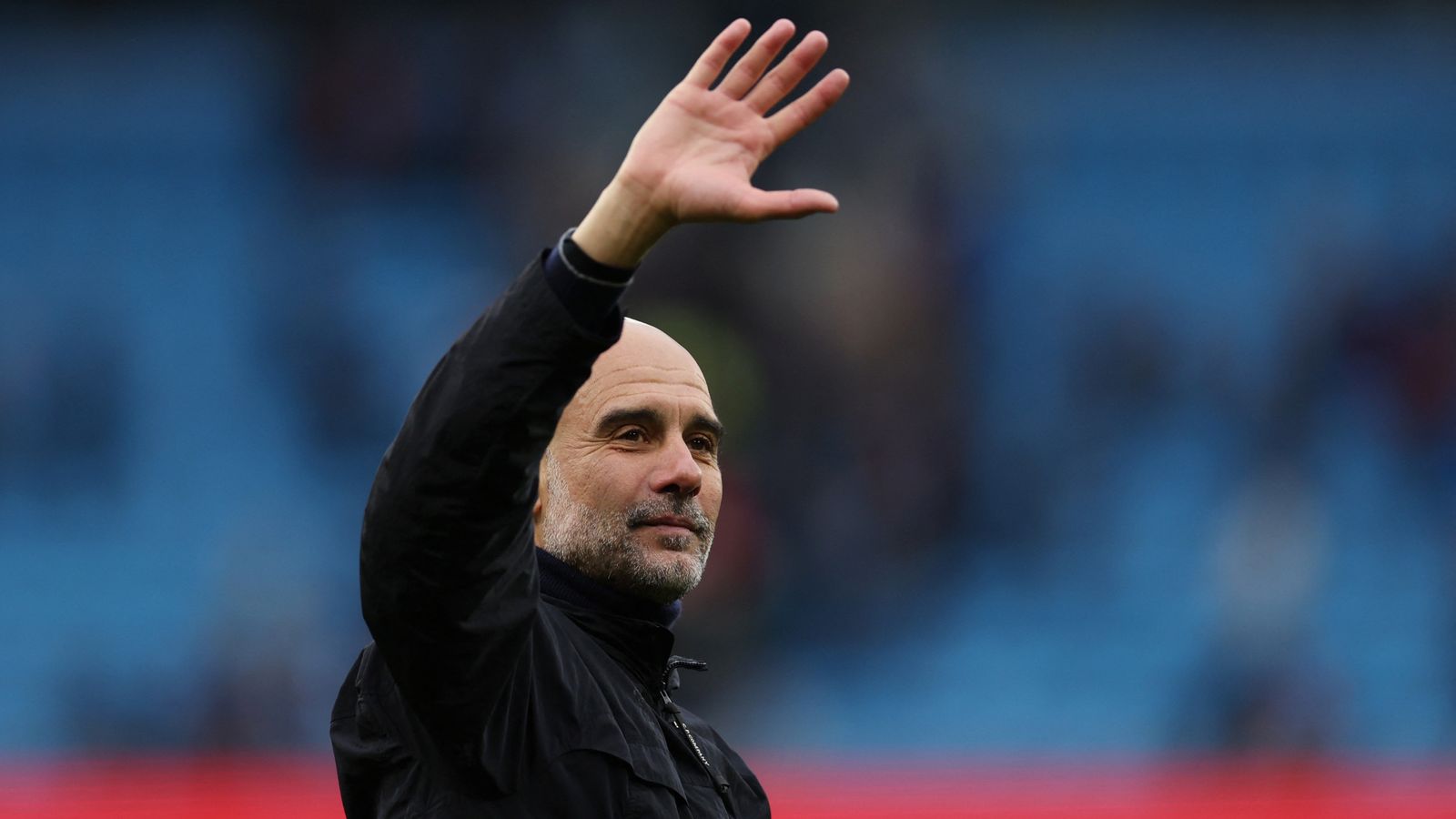
The end of Manchester City’s Premier League dominance has quickly turned attention toward the future of manager Pep Guardiola, who has now admitted a decision on his long-term stay at the club will be made after the season concludes.
City’s 1-1 draw against AFC Bournemouth on Tuesday officially handed the 2025/26 Premier League title to Arsenal, ending Guardiola’s latest bid to extend one of the most dominant eras in English football.
Speaking after the match, Guardiola stopped short of confirming whether he would remain at the Etihad beyond this summer, despite still having one year left on his contract.
“I can say I have one more year of contract and we had many years of winning,” Guardiola told Sky Sports.
“The first person who has to talk is the chairman.
“When we finish the season, we will talk and take a decision.
“I’m the happiest man on the planet to be at this club. It is extraordinary.”
The comments immediately intensified speculation across British media that Guardiola could be preparing for a major career decision after nearly a decade at Manchester City.
According to several UK outlets, discussions regarding Guardiola’s future are expected after City’s final Premier League fixture against Aston Villa this weekend.
Advertisement
However, a closer look at the reporting across major platforms shows the situation is more nuanced than early headlines suggested.
While some outlets framed Guardiola’s comments as a possible farewell, others emphasized that the Spaniard did not officially announce an exit and repeatedly expressed affection for the club.
Beyond Guardiola’s comments, Arsenal’s title win under Mikel Arteta has added a deeper layer to the discussion.
For years, City set the standard in English football under Guardiola, winning multiple Premier League titles while forcing rivals into constant rebuilding cycles. Arsenal’s breakthrough this season represents more than a single title loss — it signals a potential shift in power at the top of the league.
What makes this more complex is Arteta’s connection to Guardiola himself. Before taking charge at Arsenal, Arteta spent years as Guardiola’s assistant at Manchester City and was widely viewed as part of the coaching structure that helped shape City’s tactical dominance.
Now, the student has ended the master’s latest title run.
Several football analysts on British television described the moment as symbolic of a changing era in the Premier League.
Former Manchester United captain Gary Neville said Guardiola has “nothing left to prove” after transforming City into one of the greatest teams in Premier League history.
Pundits on ESPN and BBC also suggested City could soon face a rebuilding cycle if Guardiola eventually leaves, particularly with several senior players approaching the later stages of their careers.
Manchester City’s inability to retain the title was not caused by one result alone.
Throughout the season, City struggled with injuries, defensive inconsistency, and unexpected dropped points against mid-table clubs. While Guardiola’s side still competed strongly, the relentless dominance that defined previous campaigns appeared less consistent this year.
Reuters and other international platforms noted that Arsenal capitalized on that vulnerability through tactical discipline, defensive organization, and consistency in high-pressure matches.
The emotional reaction from Arsenal supporters after Bournemouth’s draw with City reflected the scale of the moment. Arsenal’s league title is their first since the famous 2003/04 “Invincibles” campaign.
For Manchester City supporters, however, attention quickly shifted from the title race to Guardiola’s future.
Guardiola’s influence extends beyond trophies.
Under his leadership, Manchester City became one of the most commercially powerful football clubs in the world, attracting global sponsorships, elite talent, and massive international audiences.
A managerial departure could affect transfer strategy, squad planning, and even the club’s long-term football identity.
Advertisement
The Premier League itself could also enter a different competitive cycle. Guardiola’s tactical influence reshaped English football over the last decade, forcing rival clubs to evolve their playing styles and recruitment models.
Yet the deeper issue is whether this season represents temporary disappointment or the beginning of a broader transition for City.
That question may define the next phase of the Premier League.
Guardiola joined Manchester City in 2016 and quickly built one of the most dominant teams in modern football history.
Since arriving in England, he has won multiple Premier League titles, domestic cups, and the UEFA Champions League while breaking several league records for points, goals, and consecutive victories.
Only a handful of managers in Premier League history have sustained dominance for as long.
But football history also shows that even the strongest dynasties eventually face transition periods. Similar moments occurred when Sir Alex Ferguson retired from Manchester United and when Arsene Wenger entered the final years of his Arsenal reign.
The real concern now is whether Manchester City can maintain stability while uncertainty surrounds one of the most influential managers in world football.
You must log in to comment or reply.
Comments