
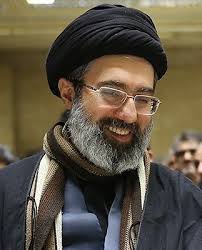
Iran has entered a rare and potentially destabilizing leadership transition after the death of its long-time Supreme Leader. Within days of the announcement, the country’s powerful clerical establishment moved quickly to install his son, Mojtaba Khamenei, as the new head of the Islamic Republic — a decision already drawing scrutiny across the Middle East and beyond.
Iran’s powerful clerical body, the Assembly of Experts, has appointed Mojtaba Khamenei as the country’s new Supreme Leader following the reported killing of his father, Ali Khamenei.
State media reports indicate that the decision was reached during an emergency session of the Assembly after what officials described as a decisive vote among senior clerics. The body, which under Iran’s constitution holds the authority to select the nation’s highest political and religious authority, called on citizens to unite behind the new leadership.
Ali Khamenei had ruled Iran since 1989, overseeing decades of geopolitical confrontation with Western powers and shaping the country’s regional alliances and military posture.
Several platforms reporting the story have placed heavy emphasis on the circumstances surrounding Ali Khamenei’s death. According to multiple reports citing regional sources, the veteran leader was killed during a joint military operation linked to the United States and Israel amid escalating tensions in the Middle East.
While Iranian state media confirmed his death, details of the alleged strike remain contested internationally, and neither Washington nor Tel Aviv has publicly released full operational confirmation.
Advertisement
What makes this episode particularly sensitive is the timing: the death occurred during a period of heightened military pressure on Iranian leadership and nuclear facilities, intensifying fears that the region could slide into a wider conflict.
Beyond the official announcement, the appointment has triggered renewed debate within Iran’s political and clerical circles.
Unlike his father, Mojtaba Khamenei has largely remained behind the scenes throughout Iran’s modern political history. Though he is considered influential, he holds the rank of a mid-level cleric rather than the senior religious status traditionally associated with the position of Supreme Leader.
However, analysts widely believe he maintains strong relationships with the Islamic Revolutionary Guard Corps, an institution that has grown into one of the most powerful pillars of the Iranian state.
That dynamic could help consolidate his authority quickly — but it also reinforces criticism that the leadership transition resembles hereditary succession, something Iran’s revolutionary ideology has historically rejected.
Several foreign policy observers note that this is the first time in the Islamic Republic’s history that the son of a Supreme Leader has directly succeeded his father, raising questions about whether Iran’s political structure is shifting toward a more dynastic model.
Global reactions to the development are already emerging.
Former U.S. President Donald Trump reportedly criticized the possibility of Mojtaba assuming leadership prior to the announcement, dismissing him as politically inexperienced and questioning his ability to manage Iran’s complex geopolitical challenges.
Beyond Washington, regional governments are watching closely. Iran’s Supreme Leader controls not only domestic policy but also the military, intelligence agencies, and key foreign policy decisions across the Middle East.
That means the transition could influence ongoing tensions involving Israel, Gulf states, and Western governments.
Advertisement
Leadership changes at the top of Iran’s political system are extremely rare. Since the establishment of the Islamic Republic in 1979, the country has had only two Supreme Leaders: Ayatollah Ruhollah Khomeini and Ali Khamenei.
Mojtaba Khamenei now becomes the third.
Yet the speed with which the Assembly of Experts moved to fill the position suggests authorities were determined to prevent a prolonged power vacuum during a volatile moment for the region.
The immediate challenge for the new leader will be establishing authority within Iran’s powerful clerical and political institutions while also gaining acceptance from a population that has endured years of economic hardship, political tensions, and international sanctions.
How he navigates this moment could shape not only Iran’s domestic political stability but also influence the broader security dynamics across the Middle East in the coming years.
You must log in to comment or reply.
Comments