
Washington may be projecting confidence that the war with Iran could end quickly, but Tehran is pushing back sharply. Iranian officials say the timeline for ending the conflict will not be dictated from the White House, highlighting how far apart the two sides remain as military strikes and economic shockwaves ripple through global markets.
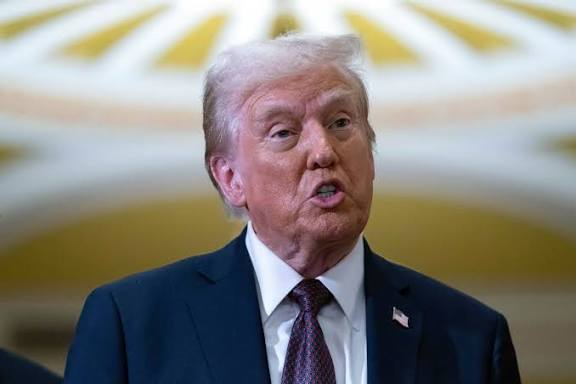
U.S. President Donald Trump told American lawmakers that the war involving Iran could end “soon,” portraying the military campaign as progressing faster than expected. But he declined to provide any concrete timeline, leaving uncertainty about whether negotiations, escalation, or prolonged confrontation lies ahead.
Trump also issued a warning tied to the global oil trade: if Iran attempts to block energy shipments through the Strait of Hormuz, a key artery for global oil supply, the United States would respond with overwhelming force.
“If they stop the flow of oil, they will be hit by the United States twenty times harder than they have been hit thus far,” Trump said.
However, Iranian officials responded within hours with a clear counter-message. A spokesperson for Iran’s Islamic Revolutionary Guard Corps (IRGC) said Tehran—not Washington—will determine when the war ends.
Advertisement
“Iran will determine when the war ends,” the spokesperson stated, warning that continued attacks by the U.S. or Israel could lead Iran to halt oil exports from the region.
Iran’s Foreign Minister Abbas Araghchi reinforced that diplomatic engagement with the United States is currently off the table. In an interview with PBS News, he accused Washington of betraying earlier assurances during negotiations over Iran’s nuclear programme.
“They told us they had no intention of attacking Iran and that they wanted a peaceful solution,” Araghchi said. “Yet they ultimately chose to strike us.”
The remarks highlight the collapse of fragile diplomatic channels that previously attempted to manage tensions over Iran’s nuclear ambitions.
Beyond the battlefield, the confrontation is already reshaping global energy markets.
Oil prices surged to nearly $120 per barrel, the highest level since 2022, amid fears that the conflict could disrupt supplies from the Gulf region. Prices later retreated to around $90 per barrel after Trump suggested the war might end quickly, triggering a temporary rebound in global stock markets.
The volatility underscores the strategic importance of the Strait of Hormuz, through which roughly one-fifth of the world’s oil supply moves. Any disruption there could trigger a wider economic shock, particularly for energy-dependent economies in Europe and Asia.
European leaders have already warned that there is no clear plan for ending the conflict quickly, raising fears of a prolonged crisis with global consequences.
While U.S. officials frame the military campaign as nearing its objectives, other international reports describe a far more uncertain trajectory.
Advertisement
Some Western analysts warn that conflicts in the Middle East rarely conclude as quickly as predicted, especially when regional alliances and proxy groups are involved.
Iran, for its part, continues to signal readiness for a sustained confrontation. Officials insist the country will defend its sovereignty and retaliate if its infrastructure or oil exports are targeted further.
The reality we face now is whether diplomatic channels can reopen before military escalation reshapes the conflict into a broader regional war.
With oil markets already rattled and strategic shipping routes under threat, the next moves from Washington, Tehran, and their allies will determine whether the crisis winds down—or deepens into one of the most consequential geopolitical confrontations in years.
You must log in to comment or reply.
Comments