
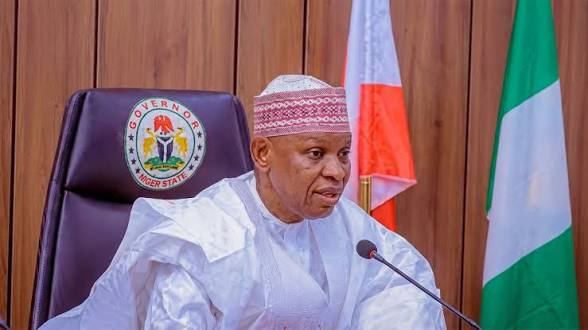
A high-profile political return is reshaping calculations in Kano, one of Nigeria’s most influential electoral states. While the governor frames it as a consolidation of strength, the timing and context point to a deeper realignment that could redefine alliances ahead of 2027.
On April 19, 2026, former Kano State governor Ibrahim Shekarau officially resigned from the Peoples Democratic Party (PDP) and rejoined the All Progressives Congress (APC).
His resignation, addressed to his ward leadership in Nassarawa Local Government Area, took immediate effect and followed what he described as “wide consultations” with his political group. The move was publicly confirmed the same day in Kano, with visible mobilisation around his residence.
Reacting swiftly, Kano State Governor Abba Yusuf welcomed Shekarau’s return, describing it as a “major boost” to the APC’s structure and electoral strength. He indicated that a formal reception would be organised in coordination with the party’s national leadership and emphasised that the party remained dominant and “battle-ready” for future elections.
However, a closer look shows that Governor Yusuf’s reaction is not just ceremonial—it is politically strategic.
Kano remains one of Nigeria’s most competitive political arenas, where influence is built not just on party labels but on personal networks and grassroots mobilisation. Shekarau, a former governor with deep political roots dating back to the early 2000s, still commands loyalty across multiple local government areas.
Advertisement
By publicly embracing him, the APC is doing more than welcoming a returning member—it is absorbing an established political structure that could shift voter alignments at ward and community levels.
What makes this more complex is the contradiction embedded in the narrative. While APC leaders project dominance, the need to highlight high-profile returns suggests an ongoing effort to reinforce internal cohesion and counter perceived vulnerabilities.
Beyond the official statement, the development also exposes the PDP’s weakening grip in key northern states. Shekarau’s exit—linked to internal party challenges—adds to a growing pattern where influential figures are repositioning ahead of 2027 rather than waiting for formal campaign cycles.
For Kano residents, the implications extend beyond party politics. Shifts like this can influence:
• Candidate selection at local and state levels
• Distribution of political patronage and resources
• Policy continuity and governance priorities
In practical terms, the political balance that shapes decisions on infrastructure, education, and economic programmes may gradually tilt as alliances evolve.
Ibrahim Shekarau governed Kano from 2003 to 2011 and has remained a central figure in northern politics, moving across major parties including the ANPP, APC, and PDP over the past two decades.
Kano itself is one of Nigeria’s largest voting blocs, making it a strategic prize in national elections. Historically, shifts in Kano’s political alignment have had ripple effects beyond the state, influencing presidential outcomes and northern coalition dynamics.
Nigeria’s recent political history shows that elite defections often precede broader electoral shifts. Similar movements ahead of the 2015 and 2019 elections reshaped party strongholds and altered expectations.
Advertisement
Current trends suggest increasing fluidity:
• Rising internal disputes within major parties
• Early coalition-building ahead of 2027
Greater emphasis on regional power blocs
Shekarau’s return fits squarely within this pattern—less an isolated event and more a signal of ongoing political recalibration.
You must log in to comment or reply.
Comments