
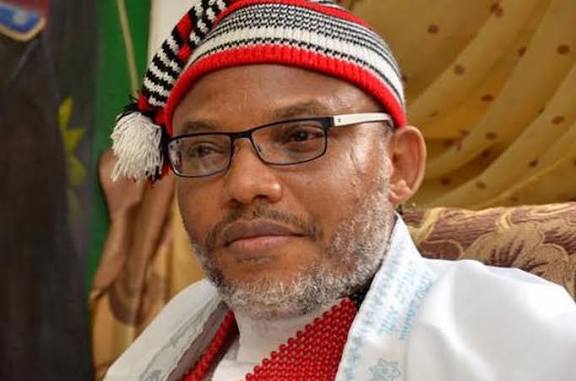
Most people are missing the real issue behind the latest call for Nnamdi Kanu’s release.
What began as a health sector summit in Abuja suddenly turned into a political flashpoint — with a South-East monarch publicly challenging Bola Ahmed Tinubu over one of Nigeria’s most sensitive national issues.
And the implications could stretch far beyond the courtroom.
A Health Summit That Turned Political
At the 2026 National Traditional and Religious Leaders Summit on Health, an unexpected moment shifted the conversation from healthcare reform to national unity.
Dr. Lawrence Agubuzu, a traditional ruler from Enugu State, directly urged President Tinubu to either release Kanu or return him to Kenya, where he was rearrested in 2021.
His warning was clear: continued detention is fueling frustration among South-East youths and weakening the credibility of traditional leaders in the region.
But here’s the bigger question…
Is this simply a political appeal — or a signal of deeper regional tension?
Advertisement
The Legal Background: Why This Case Still Matters
Nnamdi Kanu, leader of the proscribed Indigenous People of Biafra (IPOB), has been at the centre of Nigeria’s most controversial separatist case for nearly a decade.
3 key things you should know:
1. He was first arrested in 2015 over treasonable felony charges linked to separatist broadcasts.
2. After fleeing Nigeria in 2017, he was rearrested in Kenya in 2021 and returned to Nigeria in what his legal team called an “extraordinary rendition.”
3. In November 2025, a Federal High Court sentenced him to life imprisonment on terrorism-related counts.
The Supreme Court had earlier ruled he must stand trial, overturning an appellate court decision that had ordered his release.
What happens next may surprise you.
Because legally, the conviction stands — but politically, the debate appears far from over.
Why This Moment Is Different
This is not the first call for Kanu’s release.
But it is significant that:
• The appeal came during a federal summit.
• It was directed publicly at the President.
• It linked youth agitation to broader national stability.
The monarch suggested that unresolved grievances are deepening mistrust between young people and regional leaders.
Advertisement
For the Federal Government, this presents a delicate balance between enforcing judicial decisions and managing regional political sensitivities.
The Bigger National Conversation
Nigeria has faced increasing calls for restructuring, regional autonomy debates, and youth-led political engagement in recent years.
Kanu’s imprisonment remains symbolic for many in the South-East — not just as a legal issue, but as a representation of perceived marginalisation.
However, security analysts argue that reopening the matter politically could set a complex precedent, especially following a Supreme Court-backed conviction.
So the real question is:
Is this a legal matter that should remain in the courts — or a political issue that requires executive intervention?
You must log in to comment or reply.
Comments