
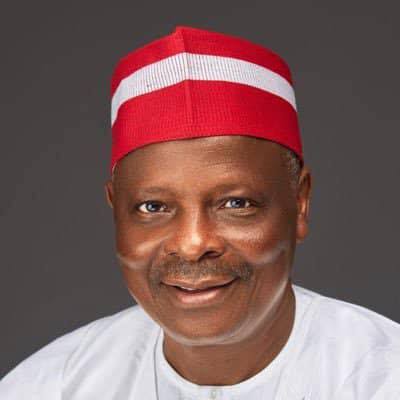
As political alignments ahead of Nigeria’s 2027 general elections begin to take shape, a fresh allegation from within the Kano State Government has intensified scrutiny around the relationship between former Kano governor Rabiu Musa Kwankwaso and President Bola Ahmed Tinubu’s administration.
The claim, made during a live television appearance on Wednesday, has triggered wider debate over opposition unity, the future of the NNPP in Kano, and whether shifting alliances in the North could quietly strengthen the ruling APC before the next presidential race.
The Director-General of Media and Publicity at the Kano Government House, Sunusi Bature Dawakin Tofa, alleged that Kwankwaso is “indirectly or strategically” working toward President Tinubu’s re-election in 2027.
Speaking on an ARISE News morning programme, Tofa argued that several political movements currently unfolding across Nigeria could eventually benefit Tinubu’s second-term ambitions.
According to him:
“Former Kano State Governor, Rabiu Musa Kwankwaso, is indirectly or strategically working towards President Bola Ahmed Tinubu’s re-election bid. There are political activities and strategic engagements already taking place ahead of 2027, and many of them will eventually favour President Tinubu.”
The Kano government aide also claimed Governor Abba Kabir Yusuf had reportedly approached Tinubu over plans to defect to the All Progressives Congress with Kwankwaso’s approval. He further alleged that former Deputy Governor Aminu Abdussalam Gwarzo supported the move.
Although the claims remain unverified, they have added a new dimension to growing speculation surrounding opposition negotiations ahead of the 2027 elections.
Advertisement
Efforts to get an official reaction from Kwankwaso were unsuccessful at the time the reports emerged.
Kano remains one of Nigeria’s most politically influential states, with one of the largest voting populations in the country. Any political shift involving Kwankwaso carries national implications because of the deep grassroots structure of the Kwankwasiyya movement across Northern Nigeria.
In the 2023 presidential election, Kwankwaso won Kano convincingly under the New Nigeria Peoples Party platform, while his political machinery also helped Governor Yusuf secure victory in the governorship election.
However, a closer look shows that maintaining political dominance in Kano has become more complicated since then.
Internal disagreements over appointments, governance priorities and control of party structures have fuelled persistent rumours of cracks within the NNPP leadership in the state.
That tension now overlaps with a broader national calculation: opposition parties may struggle to unseat the APC in 2027 if key political figures fail to build a united front.
Beyond the official accusations, the deeper issue is whether Nigeria’s fragmented opposition can realistically challenge Tinubu if major political actors continue pursuing separate negotiations.
Recent discussions around a possible Obi-Kwankwaso alliance, as well as talks involving the ADC and PDP blocs, show that coalition politics is already quietly shaping the next election cycle.
Yet Kano presents a unique challenge.
Tofa argued during the interview that Peter Obi may face limitations in Kano because of the state’s political and ideological environment.
“Political acceptance in Kano is shaped by ideology, history and regional considerations,” he said.
That statement reflects a wider reality in Nigerian politics: regional loyalty and long-standing political identity often influence voting behaviour more strongly than social media popularity or national momentum.
The Kano government spokesperson also dismissed claims that nearly five million supporters attended a recent gathering at Kwankwaso’s residence.
According to him:
“Even major public venues in Kano do not have such capacity. Kwankwaso’s residence cannot accommodate more than 2,000 people.”
Advertisement
While crowd figures are frequently disputed in Nigerian politics, the argument highlights how symbolism and perception remain central to political influence ahead of 2027.
Public appearances, rallies and strategic meetings are increasingly being used not only to mobilise supporters but also to project relevance and negotiating strength within opposition circles.
Nigeria has witnessed similar political realignments before major elections.
Ahead of the 2015 election, opposition figures merged under the APC banner to defeat then-President Goodluck Jonathan. That coalition succeeded largely because regional political heavyweights united behind a single strategy.
The current opposition landscape appears more fragmented.
Unlike 2015, today’s opposition parties face overlapping ambitions, competing regional interests and unresolved leadership questions.
That reality may ultimately shape whether Tinubu faces a consolidated challenge or benefits from divided rivals in 2027.
You must log in to comment or reply.
Comments