
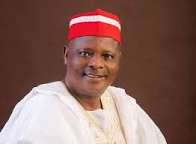
A political realignment meant to strengthen opposition forces ahead of 2027 is already triggering internal resistance in Kano. Within 24 hours of Rabiu Musa Kwankwaso joining the Nigeria Democratic Congress, a leadership dispute has surfaced, exposing the fragile balance between new influence and existing party structures.
On May 4, 2026, the Kano State chairman of the NDC, Usaini Isa Mai Riga, publicly rejected calls to cede control of the party to Kwankwaso following his defection.
Speaking in an interview, Mai Riga revealed that negotiations between both camps had collapsed after two meetings failed to produce agreement.
“He wants us to hand over the entire party to him, despite the sacrifices and time we invested in nurturing it,” he said.
The chairman made it clear the state leadership would resist:
“This will not happen. We will pursue all legitimate avenues to ensure that Kwankwaso does not take over the party structure from us.”
He further disclosed that the party’s national leadership instructed Kano officials to suspend a planned state congress—an unusual move that has deepened suspicion within the state chapter.
“We were asked not to hold our congress because there are plans to hand over the party to Kwankwaso… We will not allow the rights of party members to be undermined.”
Notably, Kwankwaso—leader of the Kwankwasiyya movement—had only just received his NDC membership card a day earlier and is yet to formally engage the state leadership.
Beyond the immediate disagreement lies a familiar pattern in Nigerian politics: the clash between political structures and political capital.
Advertisement
Kwankwaso enters the NDC with:
• A loyal grassroots movement (Kwankwasiyya)
• Strong electoral influence in Kano and parts of the North
• National visibility as a former presidential contender
But the existing NDC leadership in Kano brings:
• Established party machinery
• Local organizational control
• Legitimacy built during the party’s quieter years
This creates a structural contradiction:
Who truly owns a party—the builders or the vote-bringers?
However, a closer look shows this is not just about personalities. It reflects a broader risk in coalition politics:
• Rapid political mergers often prioritize electoral strength over institutional stability
• Local actors may feel displaced, triggering resistance
• National leadership may intervene in ways that undermine internal democracy
That framing leaves out another key dimension—voter perception. In Kano, where political loyalty is deeply tied to identity and movement politics, any sign of internal disunity could weaken the opposition’s credibility heading into 2027.
Nigeria has seen similar tensions during past political realignments:
• In the lead-up to the 2015 elections, the merger that formed the APC faced state-level disputes over candidate selection and control structures
• Internal party conflicts in states like Rivers and Zamfara later translated into electoral and legal setbacks
Advertisement
Kano itself remains one of Nigeria’s most politically decisive states, with over 5 million registered voters, making control of its party structure strategically critical.
Kwankwaso’s influence in the region is undeniable, but history suggests that imposing leadership without consensus often backfires.
The real test now is whether the NDC can reconcile national ambition with local realities.
If the Kano crisis escalates, it risks:
• Fragmenting the party before consolidation is complete
• Weakening opposition coordination in a key northern state
• Sending mixed signals to voters already skeptical of elite political alliances
What the party leadership does next—whether it enforces a compromise or backs one side—will determine whether this coalition evolves into a viable force or fractures under the weight of competing interests.
You must log in to comment or reply.
Comments