
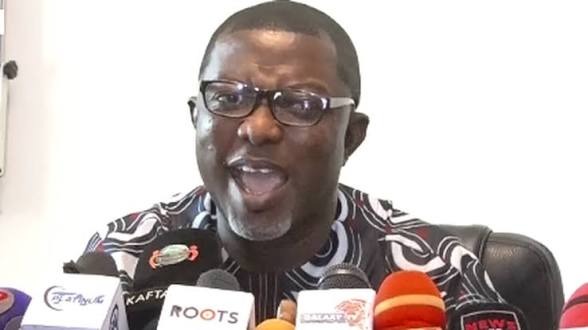
Internal tensions inside Nigeria’s Labour Party have resurfaced with fresh claims that former presidential candidate Peter Obi will not be welcomed back into the party’s structure. The remarks, made by a South-West party leader, also introduce a controversial suggestion of alignment with President Bola Tinubu ahead of 2027—raising questions about whether the party’s post-2023 identity is quietly shifting.
On Thursday, April 16, 2026, Abayomi Arabambi, the Labour Party’s National Vice Chairman (South-West), stated during a televised interview that Peter Obi “can never come back” to the party.
He further claimed that key figures within the Labour Party, including factions aligned with Abure leadership and Abia State Governor Alex Otti, had “settled” on a political direction that would see the party support President Bola Ahmed Tinubu’s re-election bid in 2027.
Arabambi also accused Obi’s allies of contributing to the internal instability that followed the 2023 general election, alleging organisational failures across polling units and party structures.
Advertisement
Beyond the headline claim, the remarks reflect a deeper structural problem inside the Labour Party: a party still struggling to define its post-2023 identity.
What makes this more complex is that Arabambi’s statement does not emerge from a unified leadership position but from a factional wing of a party still battling internal legitimacy disputes. That reality creates a recurring pattern in Nigerian opposition politics—where competing leadership blocs issue contradictory political directions under the same party label.
Yet the deeper issue is not just Obi’s political future, but the fragmentation of opposition strategy ahead of 2027. If rival factions within Labour Party continue projecting conflicting alliances—some allegedly leaning toward the ruling All Progressives Congress (APC)—it weakens the party’s bargaining power and voter confidence.
Economically and politically, such uncertainty matters. Nigeria’s opposition space has historically relied on unified messaging to challenge incumbents. The 2023 election cycle showed how fragmented opposition structures can translate into dispersed votes across urban youth blocs, particularly in Lagos, Abuja, and parts of the South-East where Labour Party gained momentum.
A historical parallel can be drawn with earlier opposition realignments in 2014–2015, when fragmented coalitions eventually consolidated into a stronger electoral machine. Current signals, however, suggest Labour Party is moving in the opposite direction—toward internal divergence rather than consolidation.
What remains unverified in Arabambi’s claim is any official Labour Party NEC resolution endorsing Tinubu or formally excluding Peter Obi from future participation. No such documented decision has been publicly confirmed by the national leadership, making the statement politically significant but institutionally weak.
Nigeria’s opposition politics has repeatedly shown that internal fragmentation reduces electoral competitiveness. In 2023, Peter Obi secured over 6 million votes largely driven by youth turnout and urban support, but post-election disputes within Labour Party have continued to strain organisational unity.
Political analysts note that parties with unresolved leadership disputes often experience voter uncertainty in subsequent cycles, particularly when multiple spokespersons project conflicting positions.
Advertisement
This pattern is especially relevant in Nigeria’s current inflationary and politically sensitive environment, where voter alignment is increasingly influenced by economic conditions, party credibility, and leadership stability.
The real issue for the Labour Party is not just whether Peter Obi returns or not, but whether it can establish a unified political direction before the 2027 election cycle gains momentum.
If factional voices continue to define the party’s public messaging, Labour Party risks entering the next election season without a coherent national strategy—an outcome that could reshape its relevance in Nigeria’s evolving opposition landscape.
You must log in to comment or reply.
Comments