
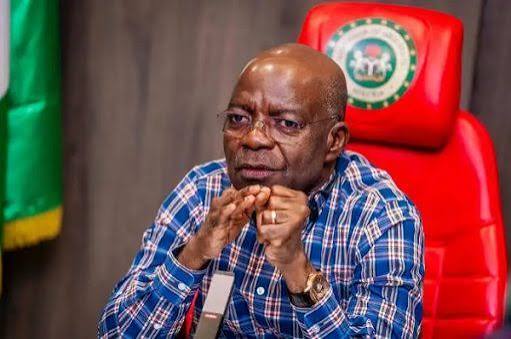
The Labour Party Nigeria appears to be stepping back from the brink of internal collapse, with Abia State Governor Alex Otti insisting the party’s most turbulent chapter has ended. Yet beneath the message of unity, the deeper test will be whether reconciliation holds long enough to reposition the party ahead of Nigeria’s high-stakes 2027 elections.
On April 28, 2026, the Labour Party held its elective national convention in Umuahia, Abia State, producing a new National Working Committee (NWC) led by Nenadi Usman.
Speaking in Abuja during the NWC’s inaugural meeting, Otti struck a reconciliatory tone:
“The worst is over. We can’t see anything worse than what we have seen in the past.”
He added that the party’s internal crisis—which had splintered factions and threatened its survival—has now given way to rebuilding efforts, emphasizing that “there were no vanquished and no winners; everybody is a winner.”
Advertisement
According to him, over 25 state chairmen aligned with rival factions attended the convention, with some reintegrated into the new leadership structure—an early sign that reconciliation efforts are underway.
Otti’s confidence signals more than internal party messaging—it reflects a broader attempt to reposition the Labour Party as a credible national force after the momentum generated by Peter Obi in the 2023 presidential election.
However, a closer look shows that unity declarations alone may not resolve the underlying fractures. The party’s crisis was not just about personalities; it exposed weak institutional structures, contested leadership legitimacy, and competing political interests across states.
What makes this more complex is timing. With 2027 approaching, Nigerian opposition politics is entering a consolidation phase. Parties that fail to resolve internal disputes early often struggle to present a unified front during primaries and coalition talks.
For Nigerian voters—especially younger demographics who gravitated toward the Labour Party in 2023—the real concern is credibility. Can the party transition from a protest-driven movement into a disciplined political machine capable of governance?
The Labour Party’s internal tensions escalated significantly between 2024 and 2026, with factional leadership disputes involving figures such as Julius Abure creating parallel structures and legal uncertainty.
Historically, Nigeria’s opposition parties have faced similar fragmentation. The pre-2015 opposition landscape, for example, required a merger that eventually formed the APC—highlighting how unity, not just popularity, determines electoral viability.
Current signals from the Umuahia convention—particularly the reintegration of rival state chairmen—suggest a strategic attempt to avoid repeating that pattern of disintegration.
Advertisement
The real test now is whether the Labour Party can sustain this fragile unity beyond rhetoric and into institutional discipline.
Reconciliation committees and inclusive leadership structures may stabilize the party in the short term, but the bigger risk lies in unresolved ambitions as the 2027 ticket begins to take shape.
What the leadership does next—especially in managing internal democracy and candidate selection—will determine whether this moment marks a genuine reset or just a temporary ceasefire in a longer political struggle.
You must log in to comment or reply.
Comments