
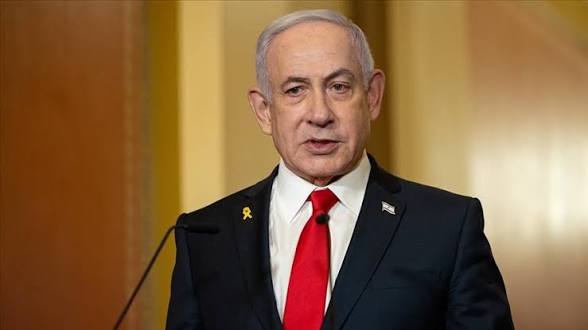
As the fourth week of fighting between Israel and Iran unfolds, Israeli Prime Minister Benjamin Netanyahu is pushing back against accusations that his government pulled the United States into the conflict.
His remarks come as fresh Israeli airstrikes reportedly hit targets in Tehran and tensions across the Middle East continue to rattle global energy markets.
Speaking during a press briefing, Netanyahu dismissed claims that Israel pressured the United States into joining the war against Iran. He emphasized what he described as a long-standing strategic alliance between Israel and the United States and highlighted his close working relationship with U.S. President Donald Trump.
Netanyahu argued that Washington’s decisions are driven by its own interests rather than Israeli influence.
“Does anyone really think someone can tell President Trump what to do?” he said, describing the cooperation between the two countries as unprecedented.
The statement appeared aimed at critics who argue that Israel’s military actions against Iran effectively forced the United States into a wider regional confrontation.
Fresh Strikes Reported in Tehran
The comments coincided with reports from the Israel Defense Forces that it had launched another wave of strikes against targets in the Iranian capital.
According to the Israeli military, the attacks targeted what it described as infrastructure linked to the Iranian government and its security apparatus. The strikes come despite calls from some international actors to limit attacks on critical energy infrastructure after previous operations targeted gas facilities tied to Iran’s export capacity.
The escalation signals that the conflict — which began after negotiations over Iran’s nuclear program collapsed — remains far from contained.
The deeper issue extends well beyond the rhetoric of who influenced whom.
The conflict between Israel and Iran has rapidly evolved into one of the most consequential Middle East crises in years. Missile exchanges, proxy attacks and strikes on energy infrastructure have raised fears of a broader regional war.
That concern is reflected in energy markets. Global crude prices have climbed sharply as traders price in the possibility of disruptions around the Strait of Hormuz — a maritime corridor through which roughly a fifth of the world’s oil supply passes.
The economic ripple effects are already being felt far beyond the Middle East, with energy-importing nations closely watching the conflict’s trajectory.
A War With Expanding Regional Impact
What makes the situation even more volatile is that the conflict is no longer confined to Israel and Iran alone. Reports of missile alerts and defensive responses have emerged from several Gulf states, underscoring how quickly the confrontation could widen.
The political stakes are equally significant. For Washington, the challenge is balancing support for a key ally while avoiding a deeper military entanglement. For Israel, the goal remains weakening Iran’s military and nuclear capabilities without triggering an uncontrollable regional escalation.
Both objectives may prove difficult to sustain as the war intensifies.
You must log in to comment or reply.
Comments