
Political fault lines ahead of Nigeria’s 2027 elections are widening earlier than expected. A fresh warning from a former senior government official is drawing attention—not just for its bold prediction, but for what it reveals about growing tensions between political parties and electoral authorities.
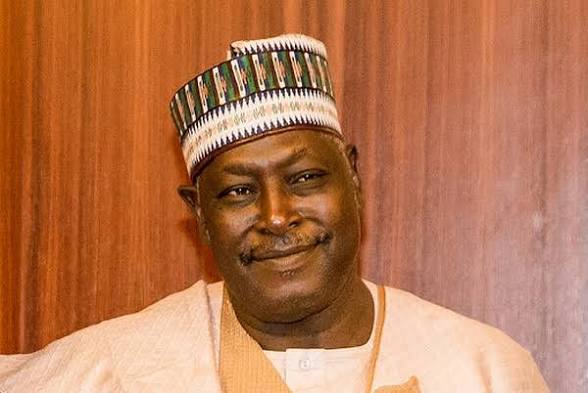
On April 15, 2026, Babachir Lawal said the ruling All Progressives Congress (APC) would “lose woefully” if Nigeria conducts a free and fair election in 2027.
Speaking on Politics Today, Lawal—now a prominent figure in the African Democratic Congress (ADC)—argued that the current administration is unlikely to allow such an electoral process, alleging a push toward a one-party system.
His remarks come as tensions escalate between the ADC and the Independent National Electoral Commission (INEC). The commission has declined to recognize certain party leadership factions and refused to monitor the ADC’s recent convention. Despite this, the party proceeded with its internal processes, insisting it would participate in the 2027 elections regardless of INEC’s position.
Beyond the official statements, this episode reflects a deeper institutional strain that could shape the credibility of the 2027 elections.
Advertisement
Lawal’s claim that the APC cannot win a fair election is politically charged, but it remains unsupported by publicly available data. What makes this more complex is the ADC’s stance toward INEC. By dismissing the commission’s authority and proceeding with its convention, the party is effectively testing the limits of Nigeria’s electoral framework.
That framing leaves out a key risk. If political parties begin to selectively comply with INEC directives, the result may not just be a legal dispute—it could trigger broader uncertainty around ballot legitimacy, candidate eligibility, and post-election acceptance of results.
For Nigeria’s political economy, this matters. Elections are not only political events; they influence investor confidence, policy continuity, and market stability. A contested process could heighten uncertainty for businesses, particularly in major economic centres like Lagos and Abuja, where political outcomes often shape fiscal direction and regulatory priorities.
Nigeria has experienced similar tensions in past election cycles, where disputes between parties and electoral authorities led to prolonged court battles.
In previous elections:
• Party leadership crises have delayed candidate nominations
• INEC decisions have been challenged up to the Supreme Court
• Post-election litigation has sometimes overshadowed governance
The current ADC–INEC standoff follows that pattern but introduces an added dimension—open defiance before the election cycle fully matures.
Advertisement
At the same time, Nigeria’s multi-party system has historically resisted dominance by a single party, despite periodic allegations of imbalance. This makes claims of an emerging one-party system politically significant, even if not yet empirically proven.
With the 2027 elections still months away, the early emergence of institutional friction is notable.
The real test now is whether legal clarity and political restraint can prevail before the campaign season intensifies. If disputes between parties and INEC remain unresolved, the risk is not just a contested election—but a contested framework for conducting it.
What electoral authorities, the courts, and political actors decide in the coming months will determine whether Nigeria’s next general election strengthens democratic confidence—or deepens existing doubts.
You must log in to comment or reply.
Comments