
Nigeria’s political calendar is accelerating faster than expected, with two high-profile moves unfolding within hours — one from within government, the other from the opposition. Together, they point to a quiet but consequential realignment that could shape the 2027 elections long before campaigns officially begin.
On March 30, 2026, Yusuf Tuggar stepped down from his role in the cabinet of Bola Tinubu, while Rabiu Kwankwaso was received into the African Democratic Congress — a development framed as part of a broader opposition convergence.
A closer look suggests these are not isolated events, but early signals of a wider restructuring of political alliances.
Advertisement
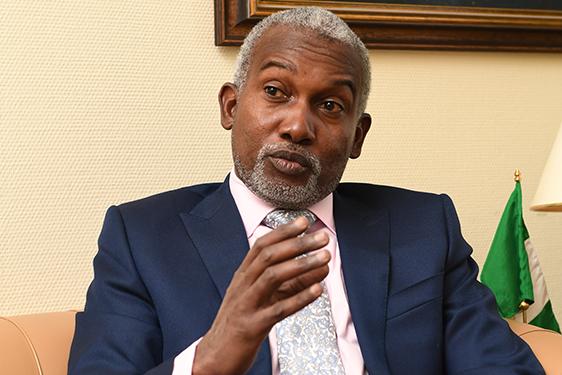
The resignation of Tuggar was confirmed through official channels, with the Foreign Affairs Ministry acknowledging his exit as he prepares to contest the Bauchi State governorship. His departure aligns with a directive requiring political appointees seeking elective office to resign ahead of the 2027 cycle. While Punch Newspapers emphasised the formal confirmation and policy compliance, other platforms such as Daily Post Nigeria focused more on the timing — noting that his resignation comes just before a critical deadline tied to electoral guidelines.
However, a closer look shows that the story extends beyond one minister leaving office. Tuggar’s exit is part of a pattern: multiple cabinet members are reportedly preparing similar moves, suggesting that governance is gradually giving way to political positioning. That shift could affect policy continuity, particularly in sectors tied to foreign relations, trade negotiations, and regional diplomacy where Nigeria is currently active.
In parallel, the reported reception of Kwankwaso into the ADC introduces a different layer of complexity. Punch Newspapers framed the event as a symbolic moment for opposition unity, highlighting remarks from David Mark about building a coalition capable of strengthening democracy. Yet the deeper issue is not just party membership — it is what this move represents in a fragmented opposition landscape.
Unlike Tuggar’s resignation, which has been corroborated across multiple reports and official statements, Kwankwaso’s alignment with ADC has not yet seen the same level of widespread, independent confirmation across major outlets such as Channels Television or Premium Times. That gap does not necessarily invalidate the development, but it highlights how political messaging and media verification often move at different speeds during high-stakes transitions.
What makes this more complex is Kwankwaso’s political weight. As a former presidential candidate with a strong base in northern Nigeria, any shift he makes carries implications beyond party lines. If sustained, his alignment with ADC could reposition the party from a peripheral platform to a potential coalition hub — particularly if other opposition figures follow.
Advertisement
Nigeria has seen similar moments before. Ahead of the 2015 elections, early defections and alliances gradually coalesced into a unified opposition that altered the balance of power. Current developments echo that pattern, though with less clarity and more fragmentation at this stage. Data from previous election cycles shows that coalition strength — not just individual candidacies — has been decisive in determining outcomes.
That framing leaves out an important local dimension. In states like Bauchi, Tuggar’s return to contest could reshape internal party dynamics and voter alignments, especially in a region where governorship races often hinge on both national influence and grassroots structures. At the same time, any credible opposition coalition involving figures like Kwankwaso could shift voter calculations in urban centres such as Lagos and Abuja, where political competition is increasingly fluid.
You must log in to comment or reply.
Comments