
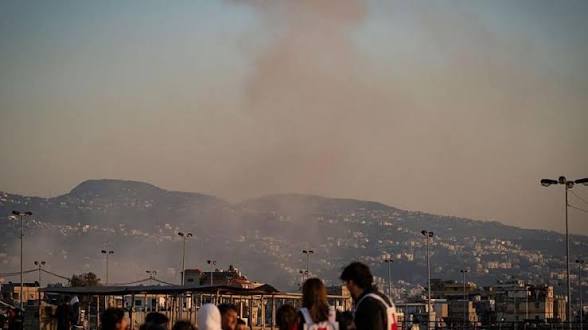
A Nigerian national has been confirmed among more than 120 people injured after Iranian missiles and drones targeted the United Arab Emirates, underscoring how the widening Middle East conflict is increasingly affecting civilians and foreign workers across the Gulf.
While UAE air defenses intercepted most of the incoming weapons, the incident highlights the growing vulnerability of densely populated economic hubs that host millions of expatriates—including thousands of Nigerians.
Authorities in the United Arab Emirates confirmed that at least 122 people were injured and six killed during a wave of Iranian missile and drone attacks that struck the country amid escalating regional tensions.
According to the UAE Ministry of Defence, the attacks form part of a broader confrontation that began on February 28, after Iran accused several Gulf states of allowing the United States to use their military bases for operations against Tehran.
Official figures released by the ministry show the scale of the assault:
• 262 ballistic missiles were launched toward the UAE
• 241 were intercepted by air defence systems
• 19 fell into the sea
Advertisement
• 2 landed inside UAE territory
Authorities also reported detecting 1,475 drones, with 1,385 intercepted and 90 landing within the country, alongside eight cruise missiles that were successfully neutralized.
Among the injured are nationals from more than twenty countries—including Nigeria, although officials have not disclosed the number of Nigerian casualties.
The victims include citizens from the UAE, Egypt, Sudan, Ethiopia, the Philippines, Pakistan, Iran, India, Bangladesh, Sri Lanka, Azerbaijan, Yemen, Uganda, Eritrea, Lebanon, Afghanistan, Bahrain, the Comoros, Türkiye, Iraq, Nepal, Nigeria, Oman, Jordan and Palestine.
That wide mix of nationalities reflects a defining reality of the UAE: its economy relies heavily on foreign labor, with expatriates making up nearly 90 percent of the population.
For countries like Nigeria—where many citizens work in Gulf states in construction, hospitality, logistics, and services—the attacks are a reminder that geopolitical conflicts can quickly spill into everyday life for migrant workers far from home.
The incident signals how the regional confrontation is moving beyond traditional military targets.
The UAE has long positioned itself as a secure financial and logistics hub, with cities like Dubai and Abu Dhabi serving as global aviation, tourism, and trade centers. Even limited strikes within its territory raise concerns about the broader impact on international commerce and energy markets.
Beyond the immediate casualties, the attacks introduce new uncertainty for:
• Foreign workers living across the Gulf
• Global shipping and aviation routes
• Oil and energy infrastructure concentrated in the region
Security analysts note that Iran’s ability to launch large numbers of drones and ballistic missiles simultaneously has become a defining feature of modern regional warfare—forcing Gulf states to rely heavily on sophisticated missile defense networks.
Yet interception systems, however advanced, cannot fully eliminate risk when large barrages are involved.
Advertisement
The confirmation that a Nigerian was among those injured will likely draw attention in Abuja, particularly as the Nigerian government has already begun evacuating citizens from parts of the region affected by the conflict.
Nigeria has tens of thousands of citizens working across the Middle East, many of whom depend on overseas employment for family income back home.
Any sustained escalation could force governments—including Nigeria—to reconsider evacuation plans, travel advisories, and diplomatic engagement with Gulf partners.
For the UAE, the immediate priority remains strengthening defenses and reassuring residents that the country remains secure despite the attacks.
But the larger challenge is geopolitical.
If missile and drone exchanges continue across the region, Gulf states could face increasing pressure as both military staging grounds and potential targets.
You must log in to comment or reply.
Comments