
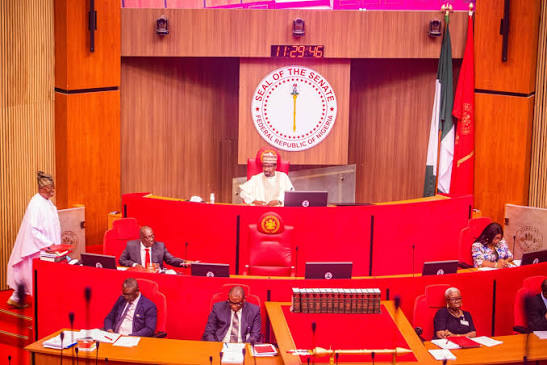
Rising xenophobic attacks in South Africa have reignited tensions in Nigeria’s political circles, with lawmakers expressing frustration over the safety of Nigerian citizens abroad. During a Senate session in Abuja, lawmakers issued strong warnings, reflecting growing anger over repeated incidents targeting foreigners.
While the debate underscored public concern, the language used has also drawn attention to how far political rhetoric can go in moments of diplomatic strain.
On Tuesday, deliberations at the Senate Nigeria focused on renewed reports of xenophobic violence affecting Nigerians in South Africa.
Lawmakers expressed concern over what they described as slow and insufficient responses from South African authorities to recurring attacks on foreign nationals.
Senator Abdul Ahmed Ningi, representing Bauchi Central, delivered one of the strongest remarks during the session, stating:
“If these things continue, we have alternatives, we have options, and therefore, these words should be sent across South Africa.”
He added:
“We know where South Africans are, not only in Nigeria but all over Africa, and we can take this fight to their territory.”
The comments immediately stood out for their unusually forceful tone, reflecting deep frustration within parts of the legislature.
Advertisement
The relationship between Nigeria and South Africa has repeatedly been tested by xenophobic outbreaks over the years.
Previous incidents have triggered:
• Emergency diplomatic meetings
• Public protests in Nigeria
• Evacuation exercises for affected citizens
Yet the underlying challenge remains unresolved: protection of foreign nationals in South Africa and enforcement against perpetrators.
Within Nigeria, senators often face public expectations to respond firmly whenever citizens abroad are attacked. This creates a political environment where strong language becomes part of parliamentary expression.
However, in diplomatic practice, Nigeria’s actual response typically follows a structured path:
• Diplomatic summons of envoys
• Requests for investigation
• Engagement through bilateral channels
There is currently no confirmed policy indicating any form of retaliation. Instead, responses remain within established diplomatic frameworks.
Xenophobic violence in South Africa has surfaced intermittently for more than a decade, with major flare-ups recorded in:
• 2008
• 2015
• 2019
Advertisement
• Subsequent smaller incidents in later years
Each wave has followed a similar pattern: public outrage, diplomatic engagement, and eventual de-escalation—without fully resolving the underlying social tensions.
Experts on African diplomacy note that legislative chambers often serve as pressure valves during international crises. Strong statements, even controversial ones, tend to reflect:
• Domestic political pressure
• Emotional response to citizen safety concerns
• Frustration with slow diplomatic progress
But they rarely translate into actionable foreign policy unless formally adopted by the executive arm of government.
The ultimate challenge now is whether diplomatic engagement between both countries can reduce tensions before rhetoric escalates further. What authorities in Abuja and Pretoria choose to prioritise—dialogue or escalation management—will determine whether this becomes another short-lived political flare-up or a renewed strain in bilateral relations.
You must log in to comment or reply.
Comments