
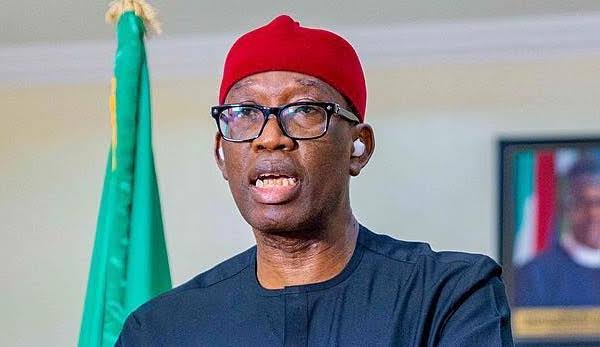
The political landscape in Delta North is beginning to take shape ahead of the 2027 general elections, with reports indicating a potential high-stakes contest between two heavyweight figures. While former Governor Ifeanyi Okowa has been linked to growing interest in the senatorial seat, Senator Ned Nwoko remains firmly positioned as the incumbent. The emerging rivalry reflects deeper realignments within party structures and elite influence in the state.
Reports circulating across Nigerian political media suggest that former Delta State Governor, Ifeanyi Okowa, is being positioned as a possible challenger for the Delta North Senatorial seat currently occupied by Senator Ned Nwoko. The development is being discussed within the context of the 2027 general elections, where early alignments are already underway.
According to Daily Post Nigeria and similar outlets, Okowa’s name has resurfaced in political discussions following his tenure as governor (2015–2023) and his role in national politics during the 2023 election cycle.
While Daily Post Nigeria framed the story as a near-declaration of intent, other political coverage from mainstream Nigerian outlets has been more cautious, describing the situation as speculative positioning rather than an official candidacy announcement.
Some platforms emphasize the growing political tension in Delta North, while others focus on internal party restructuring and elite negotiations within the APC and PDP blocs. However, most reports avoid confirming a formal declaration by Okowa, instead highlighting it as a possible political direction rather than a confirmed race entry.
Advertisement
What is often underplayed in headline versions is the strategic weight of Delta North politics, where senatorial contests are rarely isolated events but tied to broader state and national influence networks.
Beyond the surface narrative of Okowa versus Nwoko, the situation reflects a broader struggle for political dominance in Delta State’s power architecture.
Delta North has historically been a high-value senatorial district, often influenced by elite bargaining, party realignments, and economic interests tied to oil-rich constituencies. The potential involvement of a former governor like Okowa introduces a significant shift in political balance, particularly if intra-party competition intensifies within the APC structure.
At a national level, Nigeria has seen similar patterns where former governors transition into legislative contests to maintain political relevance and influence federal decision-making structures. This mirrors past scenarios in states like Rivers and Akwa Ibom, where senatorial seats became extensions of governorship power blocs rather than standalone electoral contests.
Economically, Delta State remains a critical contributor to Nigeria’s oil revenue base, meaning political control in its senatorial districts often translates into access to federal projects, constituency influence, and strategic negotiations at the national level.
What makes the current situation more sensitive is the early stage of alignment ahead of 2027, where political actors are still testing loyalty structures and gauging public sentiment before official declarations.
Nigeria’s 2023 election cycle showed that over 60% of senatorial contests involving former governors resulted in highly competitive races, especially in oil-producing states.
In Delta State specifically, political power has historically rotated between influential blocs within Delta North, Delta South, and Delta Central, with senatorial influence often shaping governorship negotiations.
Advertisement
Past elections in 2015, 2019, and 2023 demonstrate a consistent trend: early political signals tend to evolve significantly once party primaries begin, making current reports indicative rather than definitive.
The real test will come when party structures formally open nominations and political actors are forced to move from speculation to declared intent. For now, the emerging conversation around Okowa and Ned Nwoko reflects a familiar pattern in Nigerian politics—early positioning that signals influence battles long before ballots are cast.
What happens next will depend on internal party dynamics, voter sentiment in Delta North, and the strategic calculations of key political stakeholders heading into 2027.
You must log in to comment or reply.
Comments