
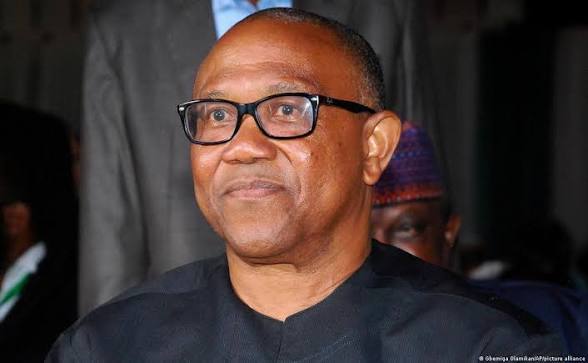
A fresh political signal from Peter Obi is drawing attention beyond campaign rhetoric, placing northern Nigeria at the center of a high-stakes economic debate. His latest comments suggest that the path to 2027 may hinge less on political alliances and more on whether bold promises around agriculture and development can withstand scrutiny.
Nigeria’s northern region has long been described as both its biggest opportunity and its deepest challenge. Now, Peter Obi’s pledge to “transform the North” is forcing a sharper conversation about whether agriculture can realistically rival oil as the backbone of the economy—and what that would mean for millions.
During a televised appearance on Arise Television, Peter Obi declared that no contender in the 2027 race could match his plans for northern Nigeria. He described the region as Nigeria’s “greatest asset,” arguing that strategic investment in agriculture could generate more revenue than oil.
The former Anambra State governor also used the platform to call for stronger democratic institutions, urging the government to support opposition parties as a way to improve governance and accountability.
Obi’s framing taps into a long-standing economic argument: that Nigeria’s overreliance on oil has stifled broader growth. Yet the deeper issue is not whether agriculture has potential—it clearly does—but whether the conditions required for transformation currently exist.
Advertisement
Northern Nigeria accounts for a significant portion of the country’s arable land, but productivity remains constrained by insecurity, poor infrastructure, and limited access to modern farming inputs. Without addressing these barriers, the promise of outperforming oil revenues remains aspirational.
What makes this more complex is the scale involved. Oil revenues, despite volatility, still account for a major share of Nigeria’s foreign exchange earnings. Replacing that with agriculture would require:
• Massive irrigation systems
• Stable rural security
• Export-oriented value chains
• Long-term policy consistency
That framing leaves out a key contradiction: agriculture-led growth is a long-term play, while Nigeria’s fiscal pressures are immediate.
Nigeria has attempted agricultural revitalization before, from Operation Feed the Nation in the 1970s to more recent anchor borrower programmes. Results have been mixed, often undermined by policy inconsistency and weak implementation.
Advertisement
Recent data shows agriculture contributes roughly 20–25% of GDP, yet export earnings remain far below oil. Meanwhile, insecurity in parts of the North continues to disrupt farming cycles, reducing output and discouraging investment.
Historically, countries that successfully transitioned to agriculture-driven export economies—such as Brazil—did so with decades of coordinated policy, infrastructure investment, and security stability.
Obi’s remarks may resonate politically, especially in a region seeking economic revival, but they also raise expectations that will be difficult to meet without detailed execution plans. The real test now is whether his vision evolves from broad ambition into a credible, data-backed roadmap.
As the 2027 race gradually takes shape, what voters—and investors—will be watching is not just who promises the most, but who can convincingly answer how.
You must log in to comment or reply.
Comments