
Elections are judged not only by the promises politicians make but also by whether citizens can cast their votes freely and trust that the results will reflect their choices. As Nigeria approaches the 2027 general elections, warnings against vote-rigging are politically significant, but the language used by candidates can be just as important as the message they intend to communicate.
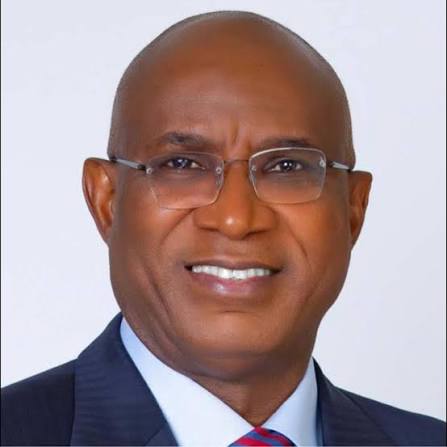
Former Deputy Senate President Ovie Omo-Agege has reportedly issued a stern warning against electoral manipulation during his campaign activities in Delta State. The central issue is broader than the reported words themselves: how can political leaders defend electoral integrity while encouraging lawful, peaceful participation and confidence in democratic institutions?
Omo-Agege warned that anyone who attempted to rig the 2027 elections would face severe consequences. The report quoted him as saying, “It’s rig and die,” and attributed the remarks to a campaign flag-off in Uvwie Local Government Area of Delta State.
The publication also reported that Omo-Agege alleged intimidation and attacks against his campaign, family and supporters. He reportedly called on security agencies and the international community to monitor political activities in the state.
Omo-Agege is seeking election to represent Delta Central Senatorial District under the Nigeria Democratic Congress (NDC). His move to the party and his 2027 senatorial ambition were reported in May 2026.
However, the precise wording of the election-rigging warning has not been independently corroborated by the other reports reviewed for this analysis.
There is little ambiguity about the principle at stake: manipulating election results undermines citizens’ political choices and damages confidence in democratic government.
For a candidate, publicly opposing electoral fraud can signal a commitment to protecting votes. It can also draw attention to concerns about the conduct of elections before campaigning reaches its final stages.
But the effectiveness of such a message depends partly on how it is delivered.
The phrase attributed to Omo-Agege is confrontational. Supporters may interpret it as a forceful warning that electoral fraud will not be tolerated. Others may understand the language as an escalation of political tensions, particularly if the reference to death is interpreted literally.
Advertisement
Without a verified recording and the surrounding context, it would be premature to determine precisely what he intended.
The broader point remains: political leaders can defend electoral integrity most effectively by identifying unlawful conduct, demanding credible investigations and supporting the institutions responsible for protecting the vote. Strong rhetoric may attract attention, but it cannot substitute for evidence, lawful remedies or transparent electoral procedures.
Omo-Agege’s warning comes as he prepares to contest Delta Central under a different political platform from the one through which he previously held prominent national office.
Channels Television reported in May 2026 that he had joined the NDC and declared his intention to contest the senatorial seat. Premium Times subsequently reported that the party had granted him a waiver to participate in its selection process.
His campaign therefore takes place within a changing political landscape in Delta State, where candidates and parties are seeking support ahead of the 2027 elections.
Report also attributes allegations of intimidation and attacks to Omo-Agege. Such allegations are serious, but they should not be treated as established facts without supporting evidence or a response from the relevant authorities.
If threats or attacks occurred, they would warrant appropriate investigation. If a candidate believes the electoral process is vulnerable to manipulation, the next step should be to identify the specific concerns and provide evidence that can be examined by the responsible institutions.
That approach would give voters a clearer basis for assessing the claims than political rhetoric alone.
From the perspective of supporters, an uncompromising message against vote-rigging can be understood as a commitment to defend electoral choices. In a competitive election, voters have a legitimate interest in knowing whether candidates will challenge irregularities and demand accountability.
From another perspective, language suggesting that people could die over electoral fraud risks being interpreted as threatening. During an election period, political statements can influence the atmosphere in which party supporters, election officials and security agencies carry out their responsibilities.
These interpretations are not necessarily mutually exclusive. A politician can intend to communicate opposition to electoral fraud while using words that some listeners find alarming.
The available reporting does not establish how different groups of voters received Omo-Agege’s remarks, so claims about widespread public reaction would be premature.
The relevant distinction is between a firm commitment to lawful accountability and language that could be interpreted as endorsing violence. Political leaders have a responsibility to make that distinction clear, especially when tensions are rising.
The debate surrounding the reported statement points to three practical issues.
First, credible elections depend on public confidence in the process. Voters must be able to participate without intimidation, and allegations of electoral manipulation must be investigated through established procedures.
Second, political parties and candidates need credible ways to document and challenge irregularities. Evidence, official complaints, transparent procedures and lawful judicial remedies are more effective tools for protecting votes than threats or confrontation.
Third, security agencies must respond impartially to credible allegations of intimidation, violence or attempted interference with elections. Their responsibility is to enforce the law and protect the rights of citizens, candidates and election officials without favouring a political party.
These responsibilities are not limited to Delta State. They apply wherever political competition creates concerns about the safety of participants or the credibility of election results.
Advertisement
The 2027 election period will place demands on candidates, parties, election administrators and security institutions. Public statements can draw attention to potential problems, but lasting confidence will depend on how institutions respond to documented complaints and whether the rules are applied consistently.
Several questions require further confirmation.
The first is whether the quotation reported by Daily Post accurately reflects Omo-Agege’s exact words and the context in which he spoke. A recording of the speech or an official transcript would help establish this.
The second is the precise nature of the alleged intimidation and attacks against his campaign, family and supporters. The available report attributes these allegations to Omo-Agege but does not independently establish the incidents or identify those responsible.
The third is whether he or his party has submitted formal complaints to security agencies concerning the alleged threats or potential electoral interference. The report does not establish whether such complaints have been filed or what action, if any, has followed.
Answers to these questions would help separate documented developments from political claims and provide voters with a clearer understanding of the situation.
Omo-Agege’s reported warning has brought electoral integrity into the political conversation in Delta State, but the wider challenge facing Nigeria is not simply how forcefully politicians condemn vote-rigging. It is whether candidates and institutions can demonstrate a credible commitment to preventing electoral abuse, investigating allegations and resolving disputes peacefully.
A democracy needs political leaders who are prepared to challenge irregularities. It also needs language and conduct that reinforce the principle that electoral disputes must be handled through lawful procedures.
Ultimately, the strength of Nigeria’s 2027 elections will be measured not by the severity of campaign warnings but by whether voters can participate freely, election officials can work without intimidation and credible evidence of misconduct receives a fair and impartial response.
You must log in to comment or reply.
Comments