
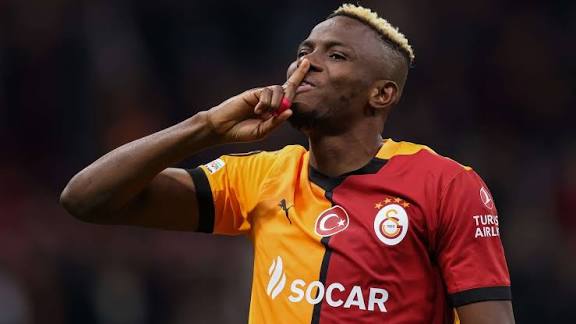
Galatasaray’s title momentum briefly gave way to speculation after Victor Osimhen was left out of their weekend defeat to Konyaspor. Within hours, social media chatter shifted from tactical concerns to claims of unpaid wages. Now, former Beşiktaş midfielder Sinan Engin has publicly rejected that narrative — but the episode raises bigger questions about timing, squad management, and pressure ahead of a defining European night.
Osimhen’s absence during Galatasaray’s 2–0 loss to Konyaspor triggered immediate reaction across Turkish football media. Some online reports suggested the Nigerian forward declined to feature due to salary issues — a claim that spread rapidly across fan forums and X (formerly Twitter).
Speaking to Turkish outlet Habersarikirmizi, Engin dismissed the allegation outright, arguing that the striker is not the type to refuse duty over financial disputes. Instead, he suggested a more strategic explanation: with a UEFA Champions League Round of 16 playoff second-leg clash against Juventus looming, Osimhen may have opted to preserve fitness.
Galatasaray, for their part, officially attributed his absence to injury.
Galatasaray are navigating a delicate period. Competing on multiple fronts demands rotation, yet dropping league points risks handing momentum to title rivals. Resting a marquee striker days before a high-stakes European tie is tactically logical — but politically risky in a league where fan expectations run high.
Advertisement
Osimhen’s profile amplifies the scrutiny. Since his high-profile move, he has been positioned not merely as a striker but as a symbol of Galatasaray’s European ambition. Any unexplained absence inevitably triggers speculation.
Beyond the immediate controversy, the situation underscores a recurring reality in elite football: injury disclosures are often minimal, wage disputes are rarely public, and narratives fill the vacuum quickly.
Financial tensions are not uncommon in Turkish football, particularly amid currency fluctuations and contract restructuring across clubs. But in this instance, there is no confirmed evidence of a salary conflict involving Osimhen.
If Engin’s interpretation holds weight, the decision was pragmatic rather than dramatic. Facing Juventus in a Champions League knockout scenario carries financial and reputational stakes far beyond a single league fixture.
European progression influences:
• Club revenue streams
• UEFA coefficient standings
• Player valuation
Advertisement
• Long-term recruitment leverage
That broader context reframes the conversation. Protecting a key striker ahead of a decisive European tie can be viewed less as controversy and more as calculated risk management.
Still, Galatasaray’s domestic defeat adds pressure. Should the Juventus result disappoint, questions about squad handling will intensify.
Ultimately, the issue is no longer about whether the rumours had substance, but whether Galatasaray’s decision pays off on the pitch. In elite football, results tend to silence speculation — or amplify it.
You must log in to comment or reply.
Comments