
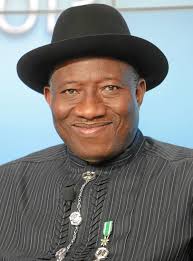
Former President Goodluck Ebele Jonathan has emerged at the center of a fresh political storm after a faction of the Peoples Democratic Party reportedly cleared him through a waiver process ahead of the party’s 2027 presidential primary, intensifying speculation over his possible return to frontline politics.
The development comes at a delicate moment for Nigeria’s opposition landscape, where internal divisions, regional calculations, and constitutional debates are already shaping early permutations ahead of the next general election. While Jonathan has not officially declared his intention to contest, the move by the faction backed by Seyi Makinde signals a growing push within parts of the PDP to rally around a familiar national figure.
A PDP screening committee led by former Minister Kabiru Tanimu Turaki reportedly granted Jonathan a waiver and cleared him for participation in the party’s presidential primary process on Tuesday in Abuja.
Former Niger State Governor Babangida Aliyu, a member of the screening committee, disclosed the decision after the exercise concluded.
The latest move followed earlier reports from several Nigerian media platforms indicating that Jonathan was expected to be screened as the faction’s sole presidential aspirant.
However, the process raised fresh questions after reports emerged that Jonathan did not personally appear for screening and was also absent during the expected submission of nomination forms.
Advertisement
Despite the uncertainty, members of the PDP faction appear determined to keep his candidacy alive ahead of what could become one of Nigeria’s most fiercely contested political cycles since 2015.
A closer look at the situation reveals that this is about far more than one politician’s potential comeback.
The PDP remains deeply divided after years of internal disputes, electoral losses, and leadership crises. Several influential blocs within the party are still struggling over zoning arrangements, regional power balance, and who can realistically challenge the ruling All Progressives Congress in 2027.
For some PDP stakeholders, Jonathan represents a compromise candidate with national recognition, international credibility, and a relatively moderate image capable of attracting voters beyond traditional party lines.
However, the deeper issue is that his possible emergence could also reopen unresolved constitutional and political debates.
Legal analysts have repeatedly pointed to Section 137 of Nigeria’s Constitution and the 2018 constitutional amendment limiting presidents to two terms in office. Although Jonathan only won one election as president in 2011 after completing the late Umaru Musa Yar'Adua’s tenure, critics argue that another presidential bid could face legal challenges.
That framing leaves out another political reality: many PDP power brokers may see Jonathan less as a final candidate and more as a unifying transitional figure capable of stabilizing a fractured opposition ahead of the elections.
What makes the situation even more complex is the regional dimension inside the PDP.
Northern political interests within the opposition remain influential, particularly after the fallout from the 2023 elections and disputes over zoning. Jonathan’s emergence could either calm or deepen those tensions depending on how negotiations evolve in the coming months.
Several political observers believe the former president’s quiet style and longstanding relationships across Nigeria’s political elite make him attractive to factions seeking stability rather than confrontation.
Yet others warn that relying on familiar political figures may reinforce criticism that major parties are struggling to produce a new generation of leadership.
Nigeria has witnessed similar political comeback conversations before.
Advertisement
Former leaders such as Muhammadu Buhari successfully returned to power after previous electoral defeats, demonstrating how political rehabilitation remains possible in Nigeria’s fluid democratic environment.
But Jonathan’s case differs significantly because of the constitutional debate surrounding tenure limits and the evolving public mood toward established political figures.
Recent voter trends, especially among younger Nigerians, show increasing frustration with elite recycling and party infighting. That means any attempt to reposition Jonathan would likely require a broader narrative beyond nostalgia or internal party consensus.
For now, the biggest unanswered question remains Jonathan himself.
Despite mounting speculation, the former president has not formally declared interest in the race. His silence continues to fuel both political calculations and uncertainty within the opposition camp.
You must log in to comment or reply.
Comments