
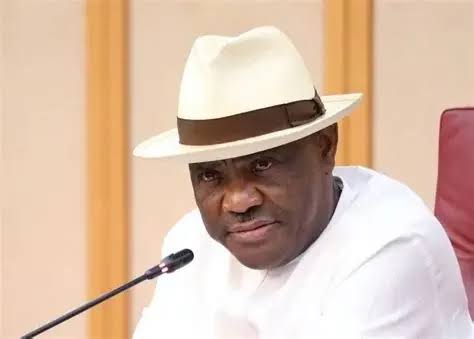
The latest gathering of the Peoples Democratic Party in Abuja signals more than a routine convention—it underscores a deepening internal struggle that could shape Nigeria’s opposition politics heading into 2027. While Nyesom Wike projects authority, the absence of key stakeholders raises fresh questions about legitimacy and unity.
On March 29–30, 2026, a faction of the PDP held what it described as its 10th Elective National Convention in Abuja. The event, attended by loyalists and reportedly monitored by the Independent National Electoral Commission, was used by Wike to declare that the party had been “taken back” by committed members after months of internal disputes. His remarks also extended to criticism of defectors and opposition figures, reflecting rising political tensions ahead of the next general election cycle.
However, a closer look shows that the convention itself is part of a broader contest for control within the PDP. While Vanguard Newspapers framed the event as a moment of rebirth and consolidation, other credible Nigerian outlets approached it with more caution. Reports across platforms consistently describe the gathering as being organised by a Wike-aligned faction rather than representing the full spectrum of party leadership. This distinction is critical: it shifts the narrative from one of recovery to one of ongoing internal competition.
Advertisement
Beyond the official statements, the deeper issue is the unresolved leadership crisis that has defined the PDP in recent months. Rival blocs within the party have continued to assert legitimacy, with disagreements rooted in earlier disputes over party structure, court rulings, and control of national organs. While legal developments have strengthened Wike’s position in some respects, they have not produced a universally accepted leadership framework. That framing leaves out a key reality—political authority within the PDP remains contested, not consolidated.
What makes this more complex is the timing. With the 2027 elections approaching, internal cohesion is no longer just a party matter but a strategic necessity. Nigeria’s opposition landscape depends heavily on the PDP’s ability to function as a credible counterweight. Yet repeated factional conventions, parallel claims to leadership, and public criticism among party elites risk weakening that role at a critical moment.
Historically, the PDP has faced similar internal fractures, particularly in the years following its loss of federal power in 2015. Those crises often resulted in defections, legal battles, and weakened electoral performance. Current trends suggest a familiar pattern: fragmentation at the top translating into uncertainty at the grassroots level. For party members and supporters across states like Rivers, Oyo, and Abia, the implications are immediate—unclear leadership signals can affect mobilisation, candidate selection, and voter confidence.
The economic and political stakes are also intertwined. A fragmented opposition can reduce policy competition, limit accountability, and reshape the balance of power nationally. In a country already navigating inflation pressures and governance challenges, the strength—or weakness—of opposition parties plays a direct role in democratic outcomes.
Advertisement
The challenge is not the success of a single convention but whether the PDP can reconcile its competing factions into a unified structure that commands broad legitimacy. What party leaders choose to do next—whether through dialogue, legal resolution, or further consolidation—will determine whether this moment marks a genuine turning point or simply another phase in a prolonged internal battle.
You must log in to comment or reply.
Comments