
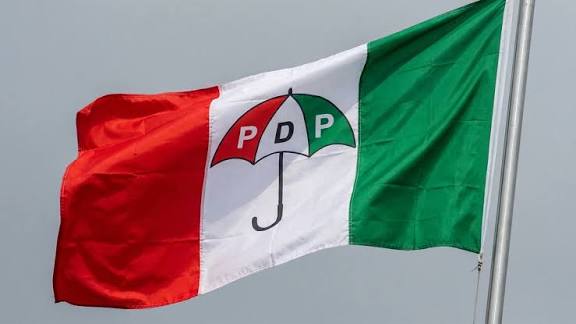
Nigeria’s main opposition party faces another moment of internal reckoning. A faction of the Peoples Democratic Party’s Board of Trustees has summoned an emergency meeting in Abuja following court rulings that reshaped the party’s disputed leadership structure.
The move underscores the growing legal and political battle within the PDP as rival camps struggle to control the party ahead of future elections.
A faction of the Peoples Democratic Party (PDP) Board of Trustees led by former senator Mao Ohuabunwa has called for a meeting scheduled for Wednesday, March 11, 2026, in Abuja.
According to a notice issued by Ohuabunwa, the gathering will hold at Life Camp, Abuja, and is intended to address developments arising from recent court rulings affecting the party’s leadership structure.
The notice emphasized that the meeting is convened by what the faction described as the “only recognised Board of Trustees” aligned with the Abdulrahman–Anyanwu National Caretaker Working Committee (NCWC), following decisions by the Federal High Court and the Court of Appeal.
Members were urged to disregard any other invitations to BoT meetings issued by rival factions.
The announcement highlights the continuing internal struggle within the PDP over legitimacy and control of party organs.
Advertisement
The meeting follows a series of judicial decisions that have intensified the PDP’s leadership crisis.
The Court of Appeal in Abuja recently upheld a Federal High Court ruling that nullified the party’s November 2025 national convention in Ibadan, citing procedural breaches including failure to give the statutory notice to the electoral commission.
That convention had produced a leadership structure aligned with one faction of the party, and its invalidation has effectively reopened disputes over who holds legitimate authority within the PDP.
The ruling has also complicated the position of several party organs, leaving multiple factions claiming legitimacy.
Some party stakeholders have argued that the judgment leaves the Board of Trustees as one of the few remaining structures capable of mediating the crisis, calling on it to intervene to prevent further fragmentation.
However, the announcement of the Life Camp meeting reflects the broader fragmentation inside the PDP.
While the Ohuabunwa-led faction insists it represents the legitimate BoT, another group within the party has continued to operate under a separate leadership structure.
Different organs of the party have also announced their own meetings in Abuja this week, including caucus and National Executive Committee gatherings scheduled at the party’s national secretariat.
The existence of multiple meeting notices from competing factions illustrates how deeply the PDP’s internal institutions have split.
What began as disagreements over conventions and leadership elections has evolved into a legal and structural battle over the party’s constitutional authority.
Beyond the immediate leadership dispute, the PDP’s prolonged internal crisis carries broader implications for Nigeria’s political landscape.
Once Africa’s largest political party and Nigeria’s dominant political force for 16 years, the PDP now faces persistent factional battles involving influential figures and regional blocs.
Advertisement
Analysts note that unresolved disputes over party leadership could weaken the opposition’s ability to present a unified platform ahead of future elections, including preparations already underway toward the 2027 electoral cycle.
The ongoing legal battles have also shifted key political decisions into the courts, raising questions about how much of the party’s internal governance will ultimately be determined through judicial intervention rather than political negotiation.
The immediate focus now turns to the BoT meeting in Abuja and whether it can produce a pathway toward reconciliation.
However, with rival factions continuing to assert authority and further appeals likely, the crisis appears far from resolved.
The key question now is whether the PDP can reunite under a single, widely recognised leadership or slip deeper into fresh legal disputes that could further destabilise Nigeria’s main opposition party.
You must log in to comment or reply.
Comments