
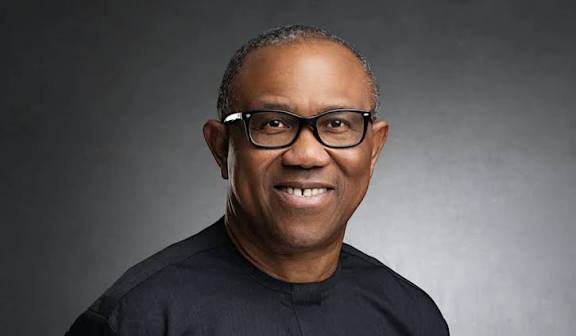
Nigeria’s 2027 election cycle is already shaping political conversations in Abuja and beyond. But former Labour Party presidential candidate Peter Obi says that focus is dangerously misplaced.
In a strongly worded message posted on his verified X account, Obi urged political leaders to shift attention from campaign calculations to what he described as a worsening national emergency — rising killings, abductions and displacement across several states.
Obi cited reports indicating that more than 1,000 Nigerians have been killed within the first two months of 2026, with thousands more abducted. He referenced violent incidents stretching from Zamfara to Plateau, Benue, Adamawa, Ondo, Edo and Kwara, painting a picture of widespread insecurity.
His central argument was blunt: while communities bury loved ones and flee their homes, political actors are already negotiating alliances, zoning formulas and party structures ahead of the 2027 elections.
“We strategize about 2027 while Nigerians struggle to survive 2026,” Obi wrote, warning that history would judge leaders not by political victories but by how they responded during crisis.
Advertisement
Obi’s warning lands at a sensitive political moment. Nigeria is barely midway into the current electoral cycle, yet political alignments are intensifying. Party defections, coalition talks and public endorsements are gaining momentum.
Yet the deeper issue is not simply whether politicians are discussing 2027 too early. It is whether governance bandwidth is being diluted by campaign distractions.
Security analysts have long argued that Nigeria’s crisis is not solely about armed groups, but about structural weaknesses — under-policing, poor intelligence coordination, slow judicial processes, and economic pressures that fuel recruitment into criminal networks.
Data from civil society trackers and security consultancies consistently show fluctuating but persistent violence levels across multiple regions. Kidnapping-for-ransom has evolved into a major criminal economy. Rural communities remain especially vulnerable, with limited state presence and delayed response times.
What makes this more complex is that insecurity also shapes political outcomes. High casualty figures can influence voter behavior, affect turnout in volatile regions, and reshape coalition-building ahead of elections. In that sense, politics and security are intertwined — but the sequencing matters. Governance failures today may define the political battlefield of tomorrow.
Nigeria has endured over a decade of insurgency in the North-East, escalating banditry in the North-West, farmer-herder conflicts in the Middle Belt, separatist tensions in the South-East, and increasing urban kidnapping networks.
While federal authorities maintain that security operations are ongoing and improving in some regions, public perception often tells a different story. Social media amplification of violent incidents has heightened national anxiety, even when official statistics show localized containment.
Obi’s statement taps into that fatigue. It resonates particularly with urban youth and middle-class voters who supported his 2023 candidacy and remain active in online political discourse.
Advertisement
Yet critics argue that broad casualty figures require careful verification and that opposition figures must avoid politicizing security tragedies. The balance between advocacy and alarmism is delicate — especially in a polarized environment.
With political maneuvering already visible across major parties, Obi’s intervention may signal an attempt to reframe the 2027 debate around governance performance rather than electoral arithmetic.
Our concern should be whether national leadership — across party lines — can recalibrate priorities in a way that visibly improves safety on the ground. Public patience is thinning. Security failures are no longer abstract statistics; they translate into displaced families, disrupted farming cycles, food inflation and declining investor confidence.
What authorities do next will determine whether 2027 becomes a referendum on insecurity — or a turning point toward stabilization.
You must log in to comment or reply.
Comments