
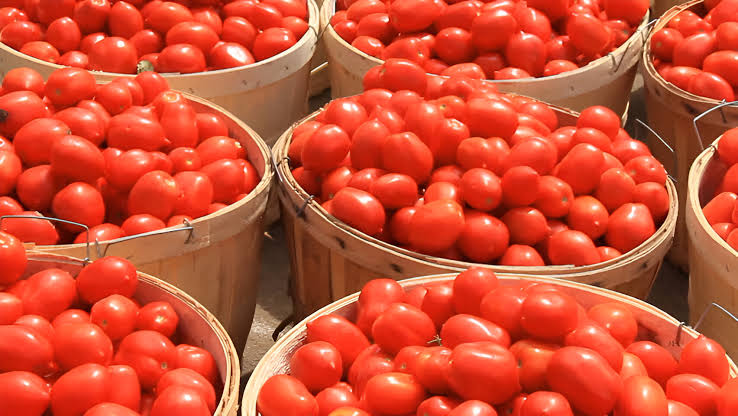
For many Nigerian families, inflation is no longer measured by official statistics but by what disappears from the shopping basket each week. The latest complaints from residents of the Federal Capital Territory over soaring tomato prices highlight a reality that millions of households face daily: even basic ingredients are becoming increasingly difficult to afford.
Tomatoes may appear to be a small part of the food supply chain, but their rising cost offers a window into wider economic challenges affecting consumers, traders, and farmers across the country.
Residents of the Federal Capital Territory have expressed concern over the continued increase in tomato prices across major markets in Abuja.
A market survey conducted by the News Agency of Nigeria found that tomato prices have risen sharply in recent weeks. Traders attributed the increase to seasonal scarcity, post-harvest losses, and rising transportation costs.
At Suleja Market, trader Malam Isah Ado said a large basket of tomatoes that previously sold for between ₦85,000 and ₦90,000 now costs between ₦150,000 and ₦170,000.
At Garki New Market, trader Philomena Bassey explained that transportation expenses from producing states to Abuja have significantly increased the final market price.
Advertisement
Other traders reported being forced to share baskets among more sellers because of the rising cost, while consumers said they had reduced purchases and were increasingly turning to cheaper alternatives.
The surge in tomato prices is not simply a story about one agricultural product becoming scarce. It reflects broader structural pressures within Nigeria's food supply system.
Transportation remains one of the biggest drivers of food inflation. Even when produce is relatively affordable at the farm gate, the cost of moving goods across long distances often determines what consumers eventually pay.
The situation also exposes the vulnerability of Nigeria's agricultural value chain. Post-harvest losses remain a persistent challenge, reducing available supply and increasing waste before products reach urban markets.
When these factors combine with seasonal fluctuations in production, consumers experience sudden price shocks that can significantly affect household spending patterns.
From the traders' perspective, rising prices are largely beyond their control.
Many sellers argue that customers often assume traders are increasing profits, when in reality they are struggling with higher transportation, handling, and procurement costs.
Consumers, however, view the issue differently. Families dealing with rising rent, transport fares, electricity costs, and other expenses see another increase in food prices as further evidence that everyday living is becoming more difficult.
Both perspectives point to the same underlying reality: the burden of inefficiencies within the food supply chain is ultimately shared across the market, affecting everyone from producers to end users.
The implications extend beyond household kitchens.
Tomatoes are a staple ingredient in many Nigerian meals. When prices rise sharply, restaurants, food vendors, and small businesses often increase prices to offset costs. This creates a ripple effect across local economies.
Advertisement
For low-income households in Abuja and other cities, food spending already consumes a significant share of monthly income. Continued increases in staple food prices could deepen pressure on household budgets and force more families to reduce food consumption or substitute nutritional choices with cheaper alternatives.
The development also raises questions about agricultural infrastructure, storage facilities, transportation networks, and measures designed to reduce post-harvest losses.
Without improvements in these areas, similar price spikes may continue to occur whenever seasonal shortages emerge.
Tomato prices alone do not define the state of Nigeria's economy, but they often reveal how economic pressures are felt at the household level. When a basic cooking ingredient becomes difficult to afford, the conversation moves beyond market fluctuations and into questions about food security, supply chain resilience, and the cost of living.
Ultimately, the question is not whether tomato prices will fall again with improved supply. The real issue may be whether the structural weaknesses driving recurring food inflation are being addressed before the next price surge arrives.
You must log in to comment or reply.
Comments