
A new strain has emerged in the already fragile relationship between Washington and its Gulf allies after reports revealed that Saudi Arabia declined to allow the United States to use its territory and airspace for a military operation linked to the Strait of Hormuz crisis.
The development comes at a sensitive moment for global energy markets, where even temporary instability around the strategic waterway can trigger oil price shocks, shipping disruptions, and inflationary pressure far beyond the Middle East — including in fuel-dependent economies like Nigeria.
Saudi sources told AFP on Friday that Riyadh prevented the United States from using Saudi airspace and military bases for “Project Freedom,” a brief US-led operation aimed at guiding ships through the Strait of Hormuz following heightened tensions with Iran.
According to the sources, Saudi Arabia maintained that allowing such operations from its territory could worsen regional instability and escalate confrontation with Tehran.
“Saudi Arabia was against the operation because it felt it would just escalate the situation and would not work,” one source reportedly told AFP.
The report followed comments by US President Donald Trump, who earlier announced a pause in the two-day-old operation amid renewed military tensions involving Iran.
The situation intensified after reports that Iranian forces attacked three American destroyers in the Strait of Hormuz, prompting retaliatory US strikes on Iranian military targets. Tehran, however, accused Washington of initiating the confrontation.
Advertisement
Saudi Arabia’s Deputy Minister for Public Diplomacy, Rayed Krimly, later reiterated the kingdom’s official position, stating that Saudi Arabia “maintains its position supporting de-escalation and negotiations efforts.”
However, a closer look shows the issue extends beyond one military operation.
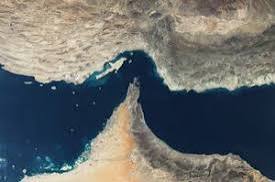
The Strait of Hormuz remains one of the world’s most critical energy chokepoints. Roughly one-fifth of global oil supply passes through the narrow maritime corridor linking the Persian Gulf to the Gulf of Oman.
Any military disruption there immediately raises concerns across international markets.
For Nigeria, the consequences are more complicated than rising crude prices alone.
Higher global oil prices can temporarily improve government revenue projections in Africa’s largest oil producer. However, a sustained regional conflict could also increase fuel import costs, weaken supply chains, pressure transportation costs, and contribute to inflation across local markets.
What makes the situation more complex is Nigeria’s continuing dependence on imported refined petroleum products despite its status as a major crude exporter.
That means geopolitical shocks in the Gulf can quickly translate into higher living costs for households and businesses in Lagos, Abuja, Port Harcourt, and other commercial centres.
Shipping insurance costs also tend to rise sharply whenever tensions escalate in the Hormuz corridor, affecting global trade routes and commodity pricing.
Beyond the immediate military dispute, Saudi Arabia’s response reflects a broader recalibration in Gulf politics.
In recent years, Riyadh has increasingly prioritised economic diversification, foreign investment, and regional stability under its Vision 2030 agenda. Avoiding direct involvement in another prolonged regional conflict aligns with that strategy.
Saudi Arabia’s recent diplomatic engagement with Iran, brokered through regional negotiations and Chinese-backed mediation efforts, has also reshaped its security calculations.
While Riyadh remains a strategic US ally, the kingdom appears increasingly reluctant to automatically align with aggressive military escalation in the region.
That shift could influence future US military planning across the Gulf, especially if regional allies continue pushing for diplomacy over confrontation.
Advertisement
The Strait of Hormuz has repeatedly been at the centre of global security concerns.
During earlier crises in 2019 and 2020, attacks on oil tankers and regional military confrontations triggered temporary spikes in oil prices and heightened fears of supply disruptions.
Analysts warn that even short-term instability can unsettle already fragile global markets struggling with inflation, high energy costs, and geopolitical uncertainty linked to conflicts in Eastern Europe and Asia.
Current market trends suggest investors are closely monitoring whether tensions between Washington and Tehran remain contained or evolve into a broader regional confrontation.
The real issue now is whether diplomatic channels can prevent another cycle of escalation in one of the world’s most strategically important waterways.
What authorities do next — particularly Washington, Tehran, and Riyadh — will determine whether the current tensions remain a temporary security flare-up or become a deeper geopolitical crisis with global economic consequences.
You must log in to comment or reply.
Comments