
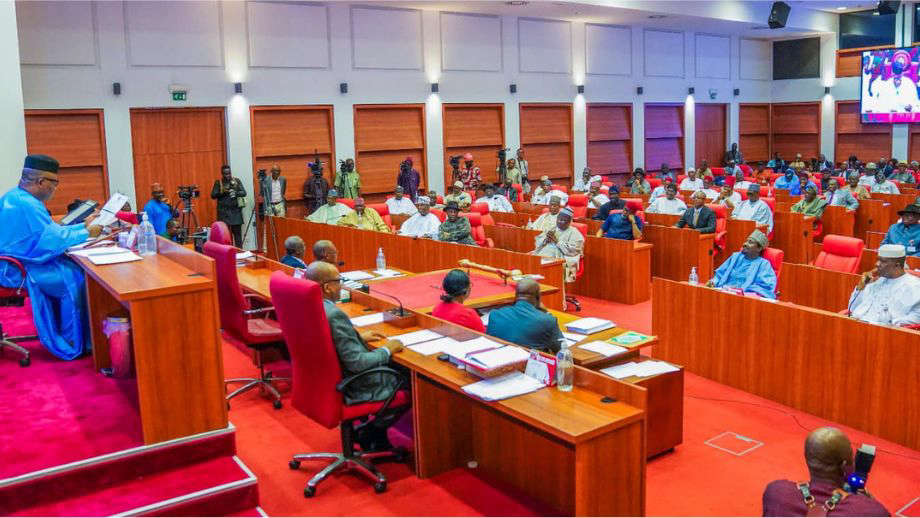
Nigeria’s Senate has returned from recess into a national security crisis marked by the abduction of schoolchildren and teachers in Oyo State. The attack, which left at least two educators and a pupil dead, has renewed scrutiny of the country’s fragile school security system. Lawmakers say the incident reflects a deeper and recurring threat to education safety across multiple regions.
The Nigerian Senate on Tuesday officially condemned the abduction of schoolchildren and teachers in Oyo State, describing the incident as a direct assault on national unity and collective humanity.
During plenary resumption, Senate President Godswill Akpabio led lawmakers in observing a minute of silence for victims of the attack, including two teachers—Michael Oyedokun and Adesiyan Adegboye—and a pupil who was also killed during the incident.
Akpabio told lawmakers that the tragedy underscored the urgency of strengthening protection for schools and communities, stressing that the nation’s future is directly tied to the safety of its children and educators.
Advertisement
He stated that while efforts by security agencies were ongoing, the Senate remained hopeful that abducted victims would be rescued and reunited with their families.
The Senate President also issued a strong warning against politicising the tragedy, arguing that insecurity affects all Nigerians regardless of party affiliation, ethnicity, or religion.
“At moments such as these, there is a temptation to divide, accuse, and seek advantage from tragedy,” he said, urging restraint from political actors.
The Oyo abduction reflects a widening geographic spread of school-targeted violence in Nigeria, previously concentrated in the North but increasingly reported in other regions. Security analysts have long warned that criminal networks involved in kidnapping for ransom are adapting by expanding operational zones beyond traditional conflict areas.
In legislative response, the Senate’s call for unity mirrors a recurring national pattern: political consensus during crises, followed by slow structural reform implementation. Despite repeated federal commitments to secure schools—especially under programs like the Safe Schools Initiative—attacks on educational institutions continue to occur, raising questions about enforcement gaps and intelligence coordination.
The emotional framing by lawmakers also highlights a persistent policy challenge: Nigeria’s security debate often intensifies after major incidents but struggles to sustain momentum once immediate public attention fades. For affected communities in Oyo State, the attack reinforces fears that rural education infrastructure remains under-protected despite years of policy discussions.
Nigeria has faced multiple large-scale school abductions over the past decade, most notably the 2014 Chibok kidnapping and subsequent incidents in Kaduna, Zamfara, and Niger States. According to security monitoring groups, hundreds of schoolchildren have been abducted in different incidents since 2014, with ransom-driven kidnappings becoming a recurring pattern.
Recent years have shown a shift in tactics, with armed groups targeting less fortified schools and transit routes. Security experts argue that fragmented intelligence sharing between federal and state agencies continues to hinder preventive responses.
Advertisement
The Oyo incident adds to a growing concern that insecurity is no longer geographically isolated, but increasingly networked across regions through mobile armed groups and criminal syndicates.
As rescue operations continue, attention is shifting toward whether Nigeria’s security agencies can translate political urgency into sustained protective measures for schools. The Senate’s appeal for unity reflects consensus at the federal level, but the real test will be whether coordination between security institutions and state authorities can prevent further attacks in vulnerable communities.
For families in Oyo State and beyond, the outcome of this incident may shape public confidence in the safety of education spaces in the months ahead.
You must log in to comment or reply.
Comments