
Nigeria's debate over state police has never been about whether the country needs better security. It has always been about whether decentralising policing can improve public safety without creating new avenues for political abuse. Speaker Tajudeen Abbas' latest assurances reflect an attempt to answer that question, but convincing Nigerians will require more than constitutional promises.
With insecurity continuing to affect communities across the country, the discussion has shifted from whether reforms are necessary to whether the proposed safeguards will be strong enough in practice.
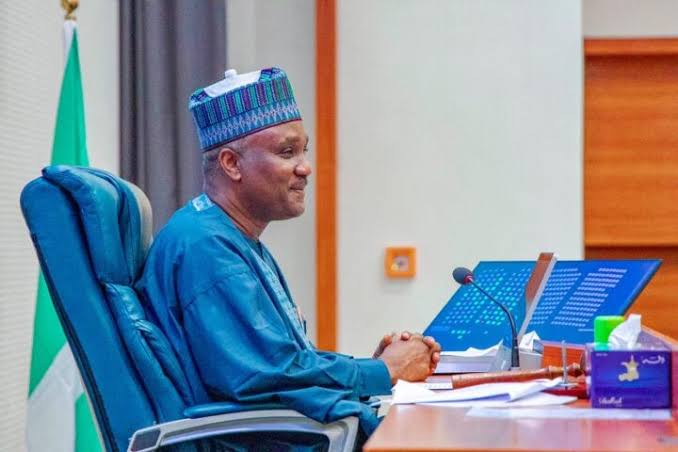
Speaking on Wednesday during the National Security Roundtable at the 2026 National Assembly Open Week in Abuja, Speaker of the House of Representatives Tajudeen Abbas defended the proposed constitutional amendment seeking to establish state police across Nigeria.
Abbas said the House of Representatives would carefully scrutinise the legislation to ensure it strengthens community policing without weakening democratic institutions or the rule of law.
He acknowledged widespread fears that governors could misuse state police as political instruments but argued that the executive bill transmitted by President Bola Tinubu includes constitutional safeguards designed to prevent such abuse.
According to Abbas, the proposal would rename the Nigeria Police Force as the Federal Police Service while allowing states to establish their own police services after meeting nationally prescribed standards. The Federal Police would continue handling terrorism, border security, federal crimes and security within the Federal Capital Territory.
Advertisement
He also explained that state police commissioners would require recommendations from the National Police Council, confirmation by state legislatures, and could only be removed through a two-thirds majority vote for just cause. The bill further allows federal intervention where a state police service becomes dysfunctional or is unlawfully deployed, subject to constitutional conditions and judicial oversight.
The Speaker also advocated a gradual rollout rather than establishing state police simultaneously in all 36 states, stressing that only financially capable states should proceed.
Abbas' remarks illustrate how the state police conversation has evolved from a purely constitutional debate into one driven by Nigeria's worsening security realities.
For years, arguments centred on whether decentralised policing could fit Nigeria's federal system. Today, persistent banditry, kidnapping, violent communal conflicts and attacks on schools have strengthened calls for security structures that possess better local knowledge and faster operational response.
By openly acknowledging concerns about political misuse instead of dismissing them, the Speaker appears to recognise that public confidence will determine the success of any reform as much as the legal framework itself.
His emphasis on federal oversight, national standards and phased implementation suggests lawmakers are attempting to address the principal criticisms that have stalled previous constitutional amendments.
Supporters of state police argue that Nigeria's security challenges have outgrown a centrally controlled police structure serving more than 200 million people. They believe local police services would improve intelligence gathering, community trust and rapid emergency response, particularly in rural areas where federal policing resources remain stretched.
Critics, however, maintain that decentralisation alone cannot solve Nigeria's security problems. Many fear that governors could exploit state-controlled police to intimidate political opponents, influence elections or suppress dissent despite constitutional safeguards. Others question whether several states possess the financial capacity to maintain professional police services without creating poorly funded security agencies vulnerable to corruption.
These competing narratives explain why state police remains one of Nigeria's most debated constitutional reforms despite decades of discussion.
If eventually passed, the legislation could represent one of the most significant changes to Nigeria's policing structure since independence.
Advertisement
A successful implementation may strengthen local security coordination, reduce response times and improve intelligence sharing between communities and law enforcement agencies.
However, implementation will likely determine whether the reform succeeds. Funding, recruitment standards, accountability mechanisms and political neutrality will be closely scrutinised by civil society, legal experts and state governments.
The debate also raises broader questions about Nigerian federalism. State police is increasingly being viewed not simply as a security reform but as part of wider discussions about devolving powers and responsibilities within the federation.
Ultimately, the question is no longer whether Nigeria needs policing reforms—it clearly does. The more difficult question is whether lawmakers can design institutions strong enough to prevent political interference while delivering the local security improvements citizens have demanded for years. What happens next in the National Assembly may shape not only Nigeria's policing architecture but also public confidence in constitutional reform itself.
You must log in to comment or reply.
Comments