
Uncertainty returned to global energy markets after Iran’s military issued conflicting signals on the status of the Strait of Hormuz, a critical oil shipping route. The rapid shift between reopening and re-closing the waterway has intensified geopolitical tension, drawing sharp warnings from the United States and raising concerns over global energy stability.
On Saturday, 18th April, Iran’s military command declared the Strait of Hormuz, a strategic passageway through which nearly one-fifth of global oil and liquefied natural gas flows, was once again closed after briefly reopening it earlier on Friday.
The announcement followed a period of confusion in which commercial vessels were seen moving through the waterway under tight instructions from Iranian authorities.
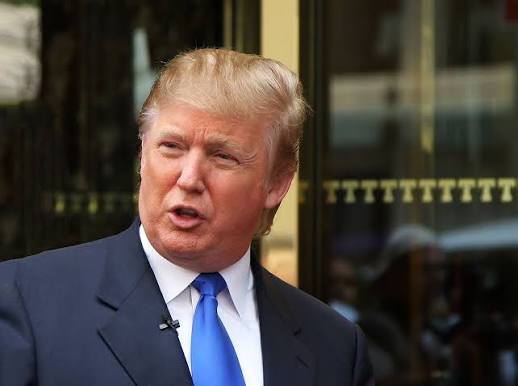
The situation escalated after U.S. President Donald Trump responded sharply, warning Tehran against what he described as attempts to “blackmail” Washington through repeated shifts in its position on the strait’s status.
Speaking at a White House event, Trump insisted that discussions with Iran were ongoing but stressed that the United States would maintain a firm stance, adding that further updates would be released later.
Advertisement
Beyond the political exchanges, the situation exposes the fragility of one of the world’s most critical energy corridors.
What makes this more complex is that the Strait of Hormuz is not just a regional chokepoint but a global economic pressure valve. Any disruption—real or perceived—immediately affects oil prices, insurance costs, and shipping logistics worldwide.
Yet the deeper issue is the pattern of strategic signaling through maritime control, where declarations of closure or reopening function as political leverage rather than sustained operational shutdowns.
This dynamic creates instability not only for global markets but also for countries heavily dependent on imported fuel, including energy-importing African economies that remain exposed to sudden price fluctuations.
Experts note that repeated uncertainty in such a critical corridor can:
Increase global crude oil volatility
Raise shipping insurance premiums
Disrupt supply chains in Asia, Europe, and Africa
Advertisement
Historically, similar tensions in the Gulf have triggered short-term spikes in global oil prices, even when full closures did not materialize.
The real test now is whether diplomatic channels can stabilize the situation before it escalates into a prolonged disruption of global energy flows.
What happens next will determine whether the Strait of Hormuz remains a tool of strategic pressure or becomes a renewed flashpoint in an already fragile geopolitical landscape.
You must log in to comment or reply.
Comments