
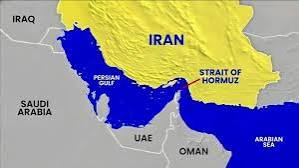
Global energy stability faces renewed uncertainty after Russia and China blocked a United Nations resolution aimed at securing shipping through the Strait of Hormuz. The decision comes at a time when disruptions in the waterway are already rattling markets and raising concerns among oil-dependent economies.
For countries like Nigeria, the implications extend beyond geopolitics—touching directly on fuel prices, foreign exchange stability, and government revenue.
On April 7, 2026, a draft resolution presented before the United Nations Security Council sought to address growing risks to commercial shipping in the Strait of Hormuz, a route responsible for roughly one-fifth of global oil flows. The proposal, introduced by Bahrain and backed by the United States and Gulf allies, received 11 votes in favour. However, vetoes from Russia and China—both permanent members—blocked its adoption, with two countries abstaining.
Advertisement
The measure had already been diluted during negotiations, with earlier provisions that could have allowed the use of force reportedly softened to gain broader support. Even in its reduced form, it failed to secure consensus.
However, a closer look shows that the disagreement goes beyond maritime security. While reports from Reuters emphasised the diplomatic breakdown and voting dynamics, and Vanguard News focused on the immediate outcome, both underplay the strategic divide shaping the decision. Moscow and Beijing have consistently opposed resolutions that could open the door to Western-led enforcement actions, particularly in regions already under geopolitical strain.
Beyond the official positions, the deeper issue is control—both of narrative and of intervention. The Strait of Hormuz is not just a shipping lane; it is a pressure point in global power politics. Any move to “secure” it raises questions about who enforces that security, under what authority, and with what long-term consequences.
What makes this more complex is the economic ripple effect already unfolding. Oil markets tend to react sharply to instability in Hormuz, and even the perception of risk can trigger price volatility. For Nigeria, where crude exports account for a significant share of government earnings, this creates a double-edged scenario: higher global oil prices could boost revenue, but they also risk increasing domestic fuel costs and inflationary pressure, particularly in urban centres like Lagos and Abuja.
Advertisement
That framing leaves out a key structural concern—global supply chain sensitivity. Shipping insurers, freight operators, and energy traders often respond faster than governments, adjusting premiums and routes at the first sign of instability. This means that even without a full blockade, partial disruptions can raise costs across the energy value chain.
Historically, tensions around the Strait have produced immediate global consequences. During previous standoffs in 2019 and earlier Gulf crises, oil prices surged and military deployments increased, often bringing major powers into closer confrontation. The current situation mirrors those patterns but with sharper divisions at the Security Council level, limiting coordinated international response.
You must log in to comment or reply.
Comments