
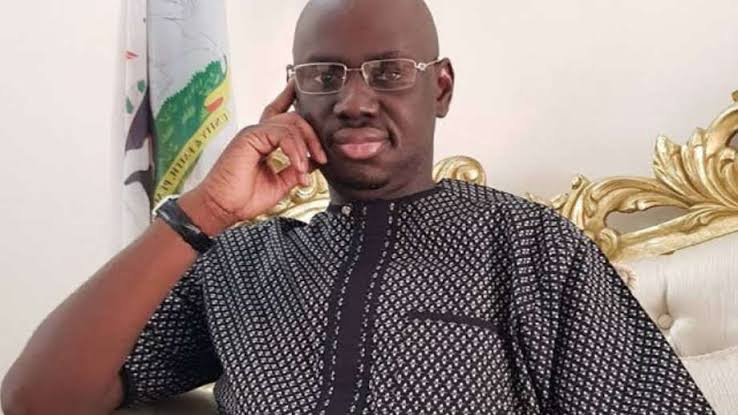
Fresh political controversy has emerged around the alleged detention and treatment of opposition-linked figures in Nigeria, after former APC spokesman Timi Frank called on the United States and international human rights groups to monitor developments involving Nasir El-Rufai and businessman Tunde Ayeni.
The remarks add another layer to growing debates over political pressure, anti-corruption investigations and power realignments ahead of the 2027 general elections. While some of the allegations remain unverified, the controversy is already fueling wider conversations about the role of state institutions in Nigeria’s increasingly tense political climate.
In a statement released on Sunday, Timi Frank accused Nigerian authorities of using anti-corruption agencies to intimidate perceived political opponents and influential figures linked to emerging opposition movements.
Frank, who now serves as the United Liberation Movement for West Papua ambassador to East Africa and the Middle East, urged the international community to closely observe developments surrounding El-Rufai and Ayeni.
“It is for this reason that I call on the United States government, the international community, and global human rights organizations to pay close attention and intervene where necessary to protect Nigerians from intimidation, harassment, and abuse of state power,” he said.
The former APC spokesman further warned that “nothing untoward” should happen to El-Rufai, arguing that any harm allegedly linked to prolonged detention or political persecution would raise serious accountability concerns.
Frank claimed that El-Rufai’s situation was tied to his political influence and past role in the coalition that supported President Bola Tinubu during the 2023 election cycle.
“They understand El-Rufai’s political relevance, influence, and what he knows,” Frank alleged.
Advertisement
On Ayeni, Frank argued that the businessman’s legal troubles were politically motivated and linked to shifting alliances within Nigeria’s power structure.
“Tunde Ayeni is a businessman, not a politician,” he stated.
“His experience appears to many as a witch-hunt designed to weaken him because of his perceived support for the opposition.”
The deeper issue is not only whether Frank’s claims are accurate, but how quickly Nigeria’s political discourse is becoming shaped by accusations of institutional weaponization.
Over the last decade, anti-corruption agencies have repeatedly found themselves caught between public expectations for accountability and accusations of political selectivity.
Supporters of government investigations often argue that prominent figures should not be immune from scrutiny simply because they hold political influence.
Critics, however, say investigations can sometimes appear uneven, especially when politically exposed individuals fall out with powerful interests.
What makes the current situation more sensitive is El-Rufai’s evolving political profile.
Once regarded as one of the strongest northern allies within the ruling APC structure, the former Kaduna governor has recently been linked to broader conversations about opposition coalitions and internal dissatisfaction within sections of the political establishment.
That political backdrop is why allegations surrounding his treatment are attracting attention far beyond Kaduna or Abuja.
Nigeria has historically witnessed heightened political tension several years before major elections.
Ahead of the 2015 and 2019 elections, accusations involving selective prosecutions, security pressure and politically motivated investigations became recurring themes in public debate.
Analysts say the current environment shares some similarities, especially as economic hardship, inflation and internal party struggles continue to reshape political loyalties.
For ordinary Nigerians, however, the issue extends beyond elite political battles.
Advertisement
Concerns over judicial independence, due process and the neutrality of state institutions directly affect public confidence in democracy and governance.
Political observers warn that prolonged perceptions of institutional bias — whether proven or not — can deepen distrust in elections and democratic processes.
Frank said he intends to compile names of officials allegedly involved in harassment and submit them to international authorities.
He also called for sanctions, including visa restrictions and asset freezes, against any officials found responsible for suppressing democratic freedoms.
“When citizens lose faith in democratic processes, instability, extremism and social unrest often increase,” he warned.
Yet the bigger risk for Nigeria may not only be the allegations themselves, but how authorities respond to growing concerns about transparency and political neutrality in the months ahead.
What authorities do next will likely determine whether this remains another short-lived political controversy or evolves into a broader debate about democratic accountability before 2027.
You must log in to comment or reply.
Comments