
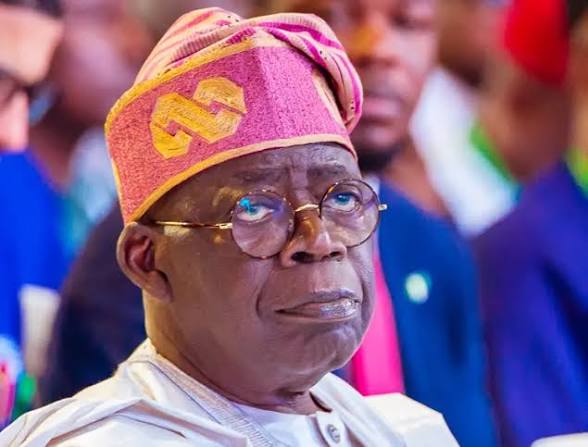
Nigeria is preparing to return to the center of African football administration after President Bola Tinubu approved the country’s bid to host the 2026 CAF Awards and the 48th CAF Ordinary General Assembly. The decision comes at a time when African football is increasingly becoming a battleground for global sports influence, tourism investment, and continental branding.
Beyond the ceremonial headlines, the development signals Nigeria’s attempt to reclaim a stronger leadership role within African football politics after years of inconsistent hosting power compared to countries like Morocco, South Africa, and Egypt.
President Bola Tinubu approved Nigeria’s hosting bid during the ongoing Africa Forward Summit in Nairobi, Kenya, following a meeting with Confederation of African Football President Patrice Motsepe.
According to the Nigeria Football Federation, the approval covers both the 2026 CAF Awards ceremony and the 48th CAF Ordinary General Assembly expected to hold in October.
Those present at the meeting included Nigeria’s Minister of Foreign Affairs Bianca Odumegwu-Ojukwu, NFF President Ibrahim Gusau, former NFF President Amaju Pinnick, and CAF Acting General Secretary Samson Adamu.
In a statement released Tuesday, the NFF said:
“The President and Commander-in-Chief of the Armed Forces of the Federal Republic, Asiwaju Bola Ahmed Tinubu GCFR, has approved Nigeria’s proposed hosting of the 48th Ordinary General Assembly of the Confederation of African Football, as well as this year’s CAF Awards Ceremony.”
Advertisement
The CAF General Assembly traditionally gathers football leaders from all 54 African member associations, zonal unions, and senior continental football administrators.
The CAF Awards, meanwhile, remain Africa’s most visible football recognition platform, celebrating elite performances across club and international football.
Hosting the CAF Awards is not simply about red carpets and trophies.
The event attracts football executives, sponsors, broadcasters, scouts, diplomats, athletes, and multinational brands. For Nigeria, this creates opportunities for tourism spending, hotel occupancy, aviation activity, media exposure, and investment discussions tied to sports infrastructure.
Yet the deeper issue is Nigeria’s long-standing struggle with sustaining world-class sporting facilities and organizational consistency.
Nigeria last hosted the CAF Awards in Lagos in 2015 at the Eko Hotel Convention Centre. That edition became memorable for several reasons. Ivory Coast legend Yaya Touré won his fourth consecutive African Player of the Year award, equaling the record of Samuel Eto'o.
It also marked the rise of Asisat Oshoala as a dominant force in African women’s football after she won her first Women’s Player of the Year award on home soil.
Since then, however, Morocco has emerged as CAF’s dominant hosting hub, regularly securing major football events, finals, and award ceremonies through heavy investment in stadiums and logistics.
What makes this more complex is that Nigeria remains Africa’s largest football audience by population and commercial reach, yet it has not consistently matched that influence with infrastructure development.
Although Morocco dominated the most recent CAF Awards held in Rabat in November 2025, Nigeria still maintained strong visibility in women’s football categories.
Super Falcons goalkeeper Chiamaka Nnadozie retained the Goalkeeper of the Year award, while Nigeria’s women’s national team secured National Team of the Year honors.
Morocco’s Achraf Hakimi won the African Men’s Player of the Year award after helping Paris Saint-Germain secure the UEFA Champions League and Ligue 1 titles.
Advertisement
The result reflected a wider continental shift. North African countries, particularly Morocco, are increasingly investing heavily in elite football systems, youth development, and international partnerships.
Nigeria’s hosting rights could therefore become more than symbolic. They may represent an attempt to reassert influence at a time when African football power dynamics are changing rapidly.
For the Nigerian government, the timing also carries political value.
Sports remain one of the few sectors capable of generating national unity across ethnic, religious, and political divisions. Hosting a major continental football gathering gives the administration an opportunity to project stability, tourism readiness, and international relevance.
However, expectations will also rise.
Questions around security, transport infrastructure, stadium readiness, hospitality standards, and event organization will likely dominate discussions in the months ahead. Nigeria’s ability to deliver a smooth event could influence future CAF and FIFA hosting opportunities.
You must log in to comment or reply.
Comments