
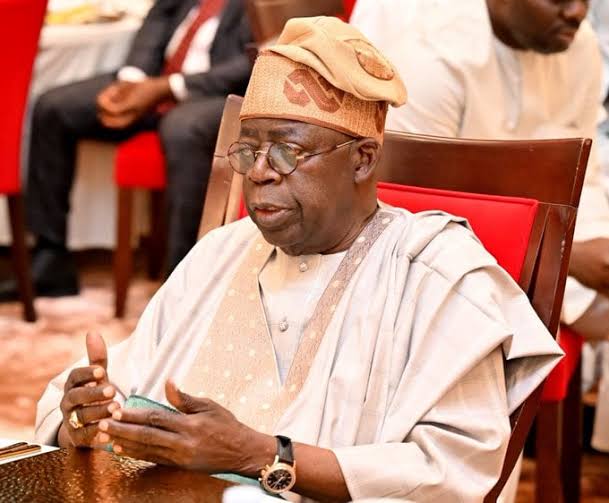
Three years into President Bola Tinubu's administration, Nigeria finds itself at a crossroads. While the government points to major economic reforms, infrastructure investments and governance changes as evidence of progress, critics argue that concerns about political competition, institutional independence and democratic accountability are becoming increasingly difficult to ignore.
The contrast between those competing narratives is shaping public debate as the country gradually turns its attention toward the 2027 general elections.
On May 29, 2026, President Bola Tinubu marked the third anniversary of his administration with a nationwide address defending some of the most consequential decisions taken since he assumed office in 2023.
The President maintained that the removal of fuel subsidies and the unification of Nigeria's foreign exchange system were necessary measures to prevent economic collapse.
According to Tinubu, the country had been spending as much as ₦18.4 billion daily on petrol subsidies before the reforms, while multiple exchange-rate windows created distortions that cost the economy trillions of naira through arbitrage and speculative activities.
"The situation demanded urgent and courageous action," the President said.
"The easy choices would have been politically convenient. But leadership demands courage, especially when the right decisions are difficult."
Tinubu argued that despite the hardship experienced by many Nigerians, the reforms have begun laying the foundation for long-term stability.
"I remain deeply conscious of those sacrifices, and I assure you: your sacrifice has not been in vain," he stated.
Advertisement
The President highlighted infrastructure projects, including the Lagos-Calabar Coastal Highway, the Abuja-Kaduna-Zaria-Kano Road, rail modernization programmes, housing initiatives, agricultural interventions and student loan funding as evidence that the administration's policies are producing results.
He also pointed to improvements in investment inflows, stock market performance and public finances as signs that confidence is returning to the economy.
However, a closer look at Nigeria's political environment reveals that the debate around Tinubu's presidency extends beyond economic reforms.
While government officials and supporters have focused on policy achievements, several political analysts, opposition figures and civil society groups have raised concerns about the broader health of Nigeria's democracy.
One of the administration's most widely praised achievements has been the push for local government autonomy following a landmark Supreme Court judgment that strengthened the financial and administrative independence of the country's 774 local government areas.
For many governance experts, the ruling represented a significant attempt to deepen grassroots development by reducing state-level control over local government resources.
Yet implementation has proven more complicated than the legal victory itself.
Disputes over local government administration in states such as Osun have raised questions about how effectively the autonomy ruling can be enforced across the federation.
Beyond governance reforms, political tensions have increasingly centered on the condition of opposition parties.
Several opposition groups, including the Peoples Democratic Party, Labour Party, African Democratic Congress and Social Democratic Party, have experienced leadership disputes, internal crises and defections over the past year.
Supporters of the ruling All Progressives Congress argue that these divisions reflect internal challenges within opposition parties. Critics, however, contend that the pattern has fueled concerns about whether Nigeria's political space is becoming less competitive ahead of the next election cycle.
The issue has attracted greater attention as more politicians, lawmakers and governors continue to align themselves with the APC.
What makes the conversation more complex is that both narratives contain elements that resonate with different sections of the electorate.
Many Nigerians acknowledge that some reforms addressed longstanding structural weaknesses in the economy. At the same time, concerns about inflation, unemployment, cost-of-living pressures and political inclusiveness remain widespread.
The administration's supporters view the current phase as a difficult but necessary transition period. Opponents argue that economic stabilization must be accompanied by stronger democratic safeguards and greater institutional independence.
Historical experience offers useful context.
Advertisement
Since Nigeria's return to democratic rule in 1999, every administration has faced criticism over the balance between political power and democratic accountability. Previous governments under different political parties were similarly accused of attempting to weaken opponents or consolidate influence.
The difference today is that the conversation is unfolding alongside some of the country's most significant economic reforms in decades.
That reality has elevated the stakes.
For business owners in Lagos, manufacturers in Kano, farmers in Benue and civil servants in Abuja, the success or failure of these policies will ultimately be measured not by government statistics alone but by whether living standards improve over time.
The road to 2027 is therefore likely to be shaped by two competing questions.
Can the administration translate its reforms into tangible economic relief for ordinary Nigerians?
And can Nigeria maintain strong democratic competition while navigating one of the most ambitious periods of economic restructuring in its recent history?
The real test now is not whether reforms were initiated, but whether their benefits become visible enough to restore public confidence while preserving the democratic institutions that underpin national stability. What happens over the next two years may determine how history ultimately judges Tinubu's presidency.
You must log in to comment or reply.
Comments