
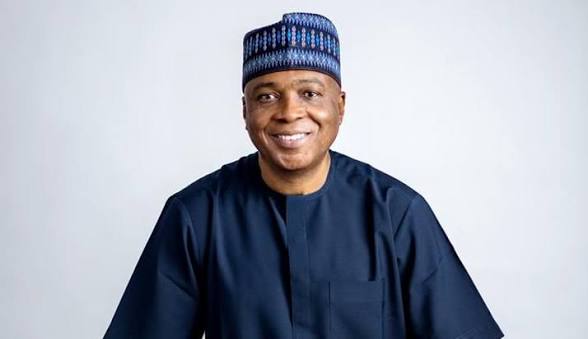
Questions about political betrayal inside Nigeria’s ruling circles have resurfaced after former Senate President Bukola Saraki publicly dismissed claims that Bola Ahmed Tinubu played a role in the legal and political battles he faced while leading the National Assembly. His remarks reopen debate about power dynamics during the administration of Muhammadu Buhari, a period marked by deep divisions within Nigeria’s political elite.
Saraki made the clarification during an interview on Politics Today on Channels Television, where he addressed longstanding speculation that Tinubu influenced investigations and prosecutions against him while he served as Senate President between 2015 and 2019.
According to Saraki, blaming Tinubu for those developments would be inaccurate because the current president did not wield the level of influence in Buhari’s administration that many Nigerians believed at the time. He insisted the decisions that led to his trial at the Code of Conduct Tribunal and investigations linked to the Offa robbery controversy were not orchestrated by Tinubu.
Advertisement
The comments arrive years after Saraki’s political battles became one of the defining dramas of Nigeria’s early APC era. As Senate President, Saraki frequently clashed with the executive branch, leading to tensions that analysts said exposed deep fractures within the ruling party. At the time, political observers widely speculated that powerful party figures might have been involved behind the scenes.
However, Saraki’s latest remarks challenge that narrative. By distancing Tinubu from the events, he shifts attention back to the broader institutional struggle that existed between the legislature and the executive during Buhari’s presidency.
Coverage by Nigerian media platforms reflects slightly different emphases. While Daily Post focused on Saraki’s direct denial of Tinubu’s involvement, other outlets reporting the interview highlighted the larger context of political persecution claims and the intense rivalry that defined Nigeria’s political landscape between 2015 and 2019. What often receives less attention is the structural conflict between Nigeria’s legislative leadership and the presidency during that period, which analysts say shaped many of the controversies that followed.
That context matters because Saraki’s tenure as Senate President coincided with a period when the National Assembly frequently asserted independence from the executive branch. Several policy disagreements and leadership struggles placed the legislature and the Buhari administration on opposite sides of major national debates.
Advertisement
Saraki maintains that his actions at the time were guided by what he believed was in the national interest, even if those decisions eventually triggered political and legal challenges. The real significance of his latest remarks lies less in revisiting old disputes and more in clarifying the roles played by key political actors during a turbulent chapter of Nigeria’s recent democratic history.
The bigger question now is whether such clarifications will reshape public perception of the political battles that defined Buhari’s administration, or whether the debate over influence and power within Nigeria’s ruling elite will continue long after those events have passed.
You must log in to comment or reply.
Comments