
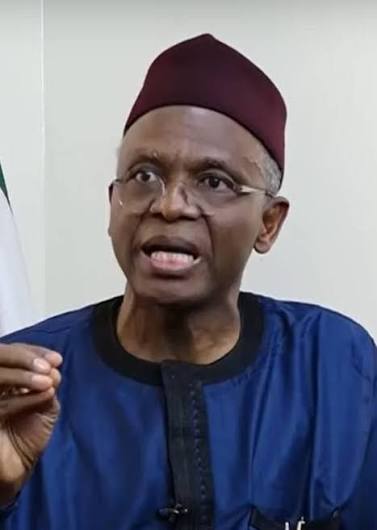
In Abuja, silence can be louder than confrontation. What began as a powerful political alliance between President Bola Ahmed Tinubu and former Kaduna governor Nasir El-Rufai is now unfolding into what insiders describe as a recalibration of power — with investigations, stalled appointments and 2027 calculations at the center.
The question is no longer whether tensions exist. It is how far they could go.
Vanguard columnist Stephanie Shaakaa framed the situation as a “political divorce” between Tinubu and El-Rufai — two figures who were instrumental in the APC’s 2023 victory.
Key developments include:
• El-Rufai’s ministerial nomination failing to materialize.
• Security-related concerns reportedly cited.
• Renewed scrutiny of Kaduna State finances under his administration.
• The Economic and Financial Crimes Commission questioning him over alleged financial misconduct.
• Growing speculation about possible political repositioning ahead of 2027, including interest around the African Democratic Congress.
Advertisement
El-Rufai has described the scrutiny as a “witch hunt.” Supporters argue it is political pressure. Others insist it is accountability.
This is bigger than one probe.
The deeper issue is power security.
In Nigerian politics, access equals influence. When a former insider suddenly loses proximity to power and faces institutional scrutiny, political actors begin recalculating loyalty.
Here’s the simple version:
• If El-Rufai remains aligned, APC stabilizes.
• If he defects or mobilizes northern elite networks elsewhere, the ruling coalition shifts.
• If investigations escalate, perception becomes as powerful as proof.
The real tension is not legal. It’s strategic.
Nigeria’s 2023 election was one of the most competitive in recent history, with APC securing victory amid regional divisions and economic stress.
Since then:
• Inflation has remained high.
• Security concerns persist across several states.
• Public trust in institutions remains fragile.
• Anti-corruption enforcement is politically sensitive.
Historically, Nigerian elections are shaped less by ideology and more by coalition arithmetic — regional alliances, elite alignments, and strategic defections.
Advertisement
A major political defection before 2027 would not just be symbolic. It could alter voter mobilization patterns in key northern states.
The reality now is whether this episode cools down quietly or evolves into structural opposition.
Three key things to watch:
• EFCC’s next steps – Formal charges or closure?
• Public posture – Does El-Rufai soften tone or escalate rhetoric?
• Party dynamics – Does APC consolidate internally or show cracks?
The bigger risk is prolonged elite distraction while economic pressure continues. Political uncertainty tends to slow policy momentum and investor confidence.
What authorities do next will determine whether this becomes a footnote — or the first chapter of a 2027 realignment.
You must log in to comment or reply.
Comments