
Infrastructure expansion in Nigeria’s capital has often been framed as a visible sign of governance success. Yet behind the commissioning ceremonies and ribbon-cutting events lies a recurring tension: how sustainable is development when it depends heavily on citizen compliance in a climate of public skepticism toward taxation?
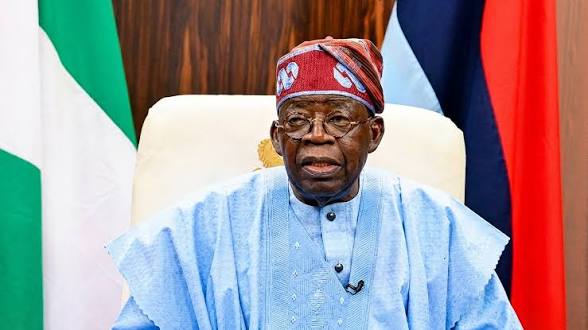
President Bola Tinubu’s recent appeal to FCT residents to pay taxes, ground rents, and land charges brings this debate back into focus at a moment when Abuja’s infrastructure agenda is accelerating.
On Wednesday in Abuja, President Bola Tinubu, represented by Vice President Kashim Shettima, urged residents and business owners in the Federal Capital Territory (FCT) to fulfil their civic obligations by paying taxes, ground rents, and land charges.
The statement was delivered during the commissioning of the full-scope development of Arterial Road N5 (Obafemi Awolowo Way), connecting Life Camp Junction to Ring Road III in the Dape District.
Tinubu described the road as a major economic corridor that would reduce traffic congestion, improve connectivity, and stimulate investment across Abuja’s expanding districts. The project was awarded to Julius Berger with a 15-month delivery timeline and is part of ongoing infrastructure rollouts under the administration’s “Renewed Hope Agenda.”
FCT Minister Nyesom Wike also highlighted an intensified commissioning schedule and credited the administration’s political backing for the accelerated delivery of projects across the territory.
Advertisement
At the heart of Tinubu’s message is a straightforward governance principle: infrastructure must be financed and sustained through internal revenue generation rather than inconsistent federal allocations.
However, in the Nigerian context, such appeals carry deeper implications. The call for tax compliance in the FCT is not merely administrative—it reflects a broader shift toward monetising urban governance, where access to services is increasingly tied to revenue performance.
This approach aligns with a global fiscal trend, where capital cities rely on local taxation to fund infrastructure. But in Nigeria, where trust in public financial management remains fragile, the success of such a model depends heavily on transparency, enforcement fairness, and visible returns on citizen contributions.
The commissioning of Arterial Road N5, therefore, is not just a physical milestone—it is also a political signal that the administration is tying infrastructure delivery to civic responsibility.
The federal government presents the development as evidence of efficient governance under the Renewed Hope Agenda. According to this framing, consistent tax payment is essential to sustaining rapid infrastructure expansion, especially in a capital city experiencing population growth and urban pressure.
Officials also argue that projects like the N5 corridor demonstrate improved execution discipline, with contractors delivering within strict timelines and government prioritising completion over abandoned works.
On the other hand, critics and segments of the public often question whether tax compliance should be emphasised in a system where accountability mechanisms are still evolving.
Some residents view repeated tax appeals as premature, particularly in areas where concerns over land charges, demolition compensation, and service delivery consistency persist. For them, the expectation of full compliance must be matched by stronger trust in how revenues are managed and reinvested.
This tension reflects a broader national debate: whether civic obligations can be fully enforced without first strengthening public confidence in governance systems.
The implications of this policy direction extend beyond Abuja.
Advertisement
Economically, improved tax compliance could significantly boost internally generated revenue for the FCT, enabling faster infrastructure delivery and reducing reliance on federal allocations. It also signals a shift toward more self-sustaining urban governance.
Socially, however, the success of this model depends on whether residents perceive infrastructure delivery as equitable and transparent. Without that trust, enforcement may be seen as coercive rather than collaborative.
Politically, the collaboration between the presidency and FCT administration under Nyesom Wike highlights a centralized, execution-driven governance style. While this may improve speed of delivery, it also raises questions about public participation in urban planning decisions.
Ultimately, the question remains whether infrastructure-led governance can succeed in Nigeria without a parallel rebuilding of civic trust in taxation systems. Roads like the N5 corridor may improve mobility and economic activity, but the deeper challenge lies in ensuring that citizens feel genuinely connected to the fiscal system that funds them.
What happens next in Abuja’s tax enforcement and infrastructure expansion will test not only the efficiency of government, but also the strength of the social contract between the state and its residents.
You must log in to comment or reply.
Comments