
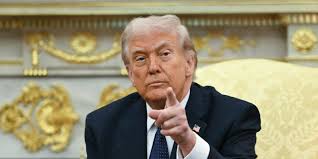
In a statement that could reshape the trajectory of tensions in the Middle East, US President Donald Trump said Iran has agreed to abandon its pursuit of nuclear weapons.
The claim, made during a White House ceremony on Tuesday, immediately raised questions about whether a diplomatic breakthrough is underway — or whether the statement reflects Washington’s interpretation of ongoing negotiations.
Speaking during the swearing-in ceremony of Homeland Security Secretary Markwayne Mullin, Trump told reporters that Tehran had agreed it would “never have a nuclear weapon.”
The comment comes amid an ongoing period of heightened military tensions involving the United States, Israel and Iran.
Trump suggested the agreement marked a turning point in the conflict, adding that the military campaign against Iranian capabilities had effectively achieved its objective.
International media outlets reported the statement but approached it cautiously.
Advertisement
Several reports emphasised that Iran has not publicly confirmed any such agreement, framing Trump’s remarks as a unilateral claim rather than a verified diplomatic deal.
Others highlighted the broader geopolitical context: months of escalating military pressure, missile exchanges and sanctions that have dramatically reshaped the balance of power in the region.
That difference in tone reflects a central uncertainty surrounding the announcement — whether it signals an actual policy shift in Tehran or simply Washington’s interpretation of evolving military and diplomatic dynamics.
Trump also revealed that Iran had launched around 100 missiles at the aircraft carrier USS Abraham Lincoln, claiming that all were intercepted.
He praised Gulf allies, including the United Arab Emirates, saying regional missile defence systems had successfully intercepted retaliatory attacks involving hundreds of rockets.
These comments underscore the military dimension of the crisis, where missile defence systems and regional alliances have played a key role in preventing escalation into a wider regional war.
Another flashpoint remains the Strait of Hormuz, through which roughly one-fifth of the world’s oil supply passes.
Iran has previously threatened to block the waterway during periods of heightened conflict, raising fears of global energy disruptions.
Trump dismissed those threats, saying the United States would maintain control over vital shipping routes if necessary.
The dispute over Iran’s nuclear ambitions has defined international diplomacy for more than two decades.
Western governments argue Tehran’s missile development and uranium enrichment programs could lead to nuclear weapons capability, while Iranian officials maintain their nuclear program is for civilian energy purposes.
Advertisement
If a genuine agreement exists, it could represent one of the most significant diplomatic developments in the region in years.
Yet without public confirmation from Tehran or formal documentation, the claim remains politically sensitive and strategically ambiguous.
Diplomatic channels will now come under closer scrutiny as governments and international observers look for concrete evidence of any commitment from Iran regarding its nuclear programme.
For now, Trump’s declaration appears to serve both as a political signal and a negotiating message, potentially aimed at influencing global perception while diplomatic contacts and military pressure continue behind the scenes.
For the wider international community, the next developments will help clarify whether the statement reflects the early stages of de-escalation or simply another moment in one of the world’s longest-running geopolitical disputes.
You must log in to comment or reply.
Comments